 Actor
Actor
Mammootty Biography, Age, Net Worth, Height, Movies & Awards

Mammootty, born Muhammad Kutty Panaparambil Ismail, stands as one of Indian cinema's most revered actors, with a career spanning over five decades and 400+ films. Known simply as "Mammukka" (big brother) to millions of fans, he represents the gold standard of Malayalam cinema—combining commercial viability with artistic excellence, mass appeal with critical acclaim, and mainstream entertainment with socially conscious storytelling. His journey from a small-town law graduate to a Padma Shri awardee and three-time National Award winner exemplifies dedication, versatility, and uncompromising artistic integrity.
What distinguishes Mammootty in the landscape of Indian cinema is his remarkable ability to reinvent himself across generations without compromising his core strengths. While many actors of his era have either retired or been relegated to character roles, Mammootty continues to headline blockbusters at 74, delivering career-best performances in films like Bheeshma Parvam (2022) and Kannur Squad (2023). His recent box office dominance proves that talent, discipline, and adaptability transcend age in an industry often obsessed with youth.
Beyond acting, Mammootty has significantly contributed to Indian cinema's infrastructure. As chairman of Malayalam Communications, he oversees the Kairali TV network, ensuring quality Malayalam content reaches global audiences. Through his production banners Playhouse and Mammootty Kampany, he backs innovative cinema that might otherwise struggle to find funding. His influence extends into cultural advocacy, film preservation, and mentoring new talent—roles that cement his status not just as an actor but as a cinema institution.
For US audiences discovering South Indian cinema through Netflix, Amazon Prime Video, and Disney+ Hotstar, Mammootty represents the pinnacle of regional Indian acting—comparable to American legends like Robert De Niro or Al Pacino in terms of longevity, versatility, and industry respect. His filmography offers windows into Kerala's history, culture, and social evolution, from period epics like Oru Vadakkan Veeragatha to contemporary thrillers like Kannur Squad. His work in Hindi and English cinema, particularly the biographical masterpiece Dr. Babasaheb Ambedkar, demonstrates his pan-Indian and international appeal. In 2025, when Maharaja's College, Ernakulam (his alma mater) included his life and career in their undergraduate History syllabus, it marked perhaps the ultimate recognition—Mammootty's transition from cinema star to cultural studies subject, from entertainer to educator.
Mammootty Quick Information
| Real Name | Muhammad Kutty Panaparambil Ismail |
|---|---|
| Stage Name | Mammootty |
| Nickname | Mammukka (Big Brother) |
| Profession | Actor, Producer, Television Executive |
| Date of Birth | September 7, 1951 |
| Age | 74 years (as of 2025) |
| Zodiac Sign | Virgo |
| Birth Place | Chandiroor, Alappuzha, Kerala, India |
| Hometown | Chempu (near Vaikom), Kottayam, Kerala, India |
| Current Residence | Kochi, Kerala, India |
| Height | 5'10" (178 cm) |
| Weight | 176 lbs (80 kg) |
| Net Worth | $42 million (₹350 crore approximately) |
| Marital Status | Married to Sulfath Kutty (since 1979) |
| Children | 2 - Daughter Surumi, Son Dulquer Salmaan (actor) |
| Nationality | Indian |
| Religion | Islam |
| Ethnicity | Malayali |
| Education | BA, LL.B. (Bachelor of Laws) |
Table of Contents
- Mammootty's Bio
- Early Life & Education
- Personal Life & Family
- Career Journey: From Law to Cinema
- Net Worth & Financial Success
- Movies & Iconic Performances
- Physical Appearance & Style
- Awards & Honors
- Latest Projects & Recent Work
- Public Image & Industry Standing
- Interesting Facts & Trivia
- Social Media & Fan Following
- Frequently Asked Questions
- Related Malayalam Cinema Articles
Mammootty's Bio
Mammootty, christened Muhammad Kutty Panaparambil Ismail, has transcended the conventional boundaries of stardom to become a cultural icon whose influence extends far beyond cinema. Known affectionately as "Mammukka" by fans and colleagues alike, he embodies the evolution of Malayalam cinema from its literary roots in the 1970s to its current status as one of Indian cinema's most critically acclaimed regional industries. His name has become synonymous with excellence, discipline, and versatility—qualities that have sustained his relevance across five distinct decades of film history.
|
What makes Mammootty extraordinary in the pantheon of Indian actors is the sheer breadth of his repertoire. He has portrayed warriors in historical epics (Oru Vadakkan Veeragatha), poets in literary adaptations (Mathilukal), social reformers in biopics (Dr. Babasaheb Ambedkar), investigators in franchise thrillers (the CBI series), politicians in social commentaries (The King), gangsters in period crime dramas (Bheeshma Parvam), and countless everyman characters in family dramas. This versatility isn't superficial—each performance demonstrates meticulous preparation, distinctive character work, and an ability to disappear into roles while maintaining his star appeal.
Unlike many regional actors who remain confined to their linguistic industries, Mammootty has successfully worked across Malayalam, Tamil, Telugu, Kannada, Hindi, and English cinema. His performance in Mani Ratnam's Thalapathi (1991) alongside Rajinikanth remains iconic in Tamil cinema. His portrayal of Dr. B.R. Ambedkar in the English-Hindi bilingual biographical film earned him his third National Award and introduced his work to pan-Indian audiences. These cross-linguistic ventures weren't opportunistic diversions but carefully chosen projects that expanded Indian cinema's narrative possibilities.
Mammootty's screen presence combines gravitas with accessibility—he can project authority in courtroom dramas, vulnerability in romantic sequences, menace in antagonist roles, and warmth in family films. His dialogue delivery, characterized by precise diction and modulated intensity, has become a masterclass for aspiring actors. Directors frequently cite his professionalism: arriving prepared, understanding the vision, contributing creatively, and executing flawlessly. This combination of talent and work ethic explains why, even at 74, he remains A-list directors' first choice for lead roles.
Beyond on-screen achievements, Mammootty's off-screen persona reflects the same discipline and humility. In an industry where stars often cultivate larger-than-life public images, he maintains dignified privacy, letting his work speak for itself. He avoids controversies, engages meaningfully with social issues, supports charitable causes without publicity, and mentors younger talent without patronization. Like fellow Malayalam legends Mohanlal and Dileep, Mammootty represents a generation of actors who view cinema as craft rather than celebrity platform, where excellence matters more than hype, and where longevity comes from respect earned rather than attention demanded.
Mammootty's Early Life & Education
Childhood & Family Background
Mammootty was born on September 7, 1951, in Chandiroor, a small village in Alappuzha district, Kerala. His father, Ismail Panaparambil, was a farmer and small businessman, while his mother, Fatima, managed the household in traditional Kerala Muslim family fashion. The family later moved to Chempu, near Vaikom in Kottayam district, where Mammootty spent most of his formative years. He grew up with five siblings—two brothers (Ibrahimkutty and Zakariah) and three sisters (Ameena, Sauda, and Shafina)—in a close-knit family environment that emphasized education, moral values, and hard work.
Growing up in rural Kerala during the 1950s and 1960s meant exposure to traditional art forms, religious festivals, and the state's rich literary culture. Kerala's unique socio-political environment—marked by high literacy rates, progressive social movements, and vibrant cultural traditions—shaped young Muhammad Kutty's worldview. The communist movement, social reform initiatives, and the flowering of Malayalam literature and cinema during this period created an intellectually stimulating environment that would later inform his choice of film roles.
The Panaparambil family, though not wealthy, valued education and ensured all children received quality schooling. Mammootty's father, despite modest means, invested in his children's education, viewing it as the path to social mobility and respectability. This middle-class upbringing—neither impoverished nor privileged—gave Mammootty an understanding of common people's struggles and aspirations that would later resonate in his everyman roles on screen.
Interestingly, nothing in his childhood suggested a future in cinema. He was a regular student, interested in academics and sports, without any apparent theatrical inclinations. Unlike many actors who discover their calling early through school plays or mimicry, Mammootty's entry into cinema came later, almost accidentally, after he had already embarked on a legal career. This unconventional path gave him maturity and life experience that enriched his subsequent performances.
Educational Journey: From Village Schools to Law College
Mammootty began his schooling at Government High School, Kulasekharamangalam, before continuing at Government School, Ernakulam, as his family moved for better educational opportunities. His academic performance was consistently good, though not exceptionally brilliant. He excelled in languages and humanities, showing particular interest in history and literature—subjects that would later help him understand period roles and literary adaptations.
After completing his high school education, he enrolled in Sacred Heart College, Thevara, in Kochi for his pre-degree (equivalent to junior college in the US system). This institution, run by Catholic missionaries, provided exposure to diverse perspectives and Western educational methods while maintaining Kerala's progressive educational traditions. It was during this period that he began contemplating career options, initially considering journalism before settling on law.
Mammootty pursued his undergraduate degree at Maharaja's College, Ernakulam, one of Kerala's premier institutions with a storied history dating back to the 19th century. He graduated with a Bachelor of Arts (BA) degree, majoring in subjects that developed his analytical and expressive capabilities. Maharaja's College's intellectually vibrant atmosphere, with its tradition of producing writers, politicians, and artists, exposed him to cinema, literature, and social discourse at higher levels.
Following his BA, Mammootty enrolled in Government Law College, Ernakulam, earning his Bachelor of Laws (LL.B.) degree. Law college required mastering legal principles, developing argumentation skills, and understanding human behavior and motivations—all skills that would serve an actor well. His legal education instilled discipline, attention to detail, and the ability to analyze texts deeply, qualities evident in his meticulous approach to scripts and character preparation.
After qualifying as a lawyer, Mammootty briefly practiced law in Manjeri, a town in Malappuram district. However, his legal career was short-lived. The routine of courtroom practice didn't satisfy his creative inclinations, and he felt drawn toward something more expressive. When opportunities arose to work in cinema—initially as a junior artist and then in small roles—he gradually transitioned away from law. His family, while initially concerned about this unconventional career shift, eventually supported his decision when his talent became evident. This legal background, though brief, gave Mammootty a unique perspective that distinguishes him from actors who entered cinema directly from school or modeling.
Mammootty's Personal Life & Family
Marriage & Family Life
Mammootty married Sulfath Kutty on May 1, 1979, in Kerala, at a time when his film career was just beginning to take shape. Sulfath, coming from a traditional Malayali Muslim family, has remained largely away from the public eye throughout Mammootty's five-decade career, maintaining the privacy that both value deeply. Their marriage, now spanning over 45 years, represents stability and partnership rare in the film industry, where relationships often become public spectacles.
The couple has two children: a daughter, Surumi, and a son, Dulquer Salmaan, who has become a successful actor in his own right. Surumi has maintained complete privacy, staying away from the film industry and leading a normal life away from media attention. Dulquer Salmaan, however, followed his father into cinema, making his debut in 2012 and subsequently establishing himself as one of South Indian cinema's most popular young stars with successful films in Malayalam, Tamil, Telugu, and Hindi.
The father-son dynamic between Mammootty and Dulquer is noteworthy. Despite his legendary status, Mammootty never imposed a film career on his son. Dulquer completed his education in the United States, worked in business management, and only later chose acting of his own volition. When he did enter cinema, Mammootty reportedly advised him to forge his own path rather than rely on the family name—advice Dulquer has followed, carefully choosing diverse roles that distinguish him from his father's legacy while honoring it.
For US audiences, understanding Indian family dynamics is important. In India, particularly in Kerala, family units tend to be close-knit, with strong inter-generational bonds. Despite his superstardom, Mammootty has maintained these traditional values, regularly visiting his hometown, staying connected with extended family, and ensuring his children received both a modern education and a cultural grounding. This balance between global success and local roots characterizes his approach to both career and family.
Personal Values & Lifestyle
Mammootty is known for his disciplined lifestyle—early rising, regular exercise, moderate eating habits, and systematic work routines. Even in his 70s, he maintains fitness levels that allow him to perform action sequences and demanding roles. Friends and colleagues describe him as punctual, methodical, and intensely focused when working, yet warm and humorous in personal interactions.
| Favorite Reading | Malayalam literature, history, biographies |
|---|---|
| Favorite Cuisine | Traditional Kerala Muslim cuisine, especially seafood preparations |
| Hobbies | Reading, travel, watching world cinema, fitness |
| Favorite Actors | Prem Nazir (Malayalam legend), Marlon Brando, Al Pacino |
| Personality Traits | Disciplined, reserved, humble, perfectionist |
| Fitness Routine | Regular gym workouts, yoga, controlled diet even in 70s |
| Social Causes | Education, healthcare, disaster relief (maintains low profile) |
Unlike many celebrities who leverage philanthropy for publicity, Mammootty's charitable work remains largely unpublicized. He contributes to educational institutions, supports medical causes, and assists during natural disasters, preferring anonymous donations to public gestures. This approach reflects traditional Islamic values of charity without ostentation and Kerala's cultural norm of quiet social responsibility.
His relationship with religion is personal and private. While practicing Muslim, he avoids mixing religion with profession or using faith for image-building. He works across religious festivals, portrays characters of all faiths with equal respect, and maintains friendships and professional relationships irrespective of religious boundaries—reflecting Kerala's syncretic cultural traditions where religious plurality is deeply embedded in the social fabric.
Mammootty's home in Kochi reflects understated elegance rather than ostentatious luxury. Unlike some stars who showcase palatial residences, he maintains privacy about his living spaces, rarely allowing media access. This boundary between public and private life has helped him maintain sanity in an industry where privacy is often the first casualty of fame. His brother Ibrahimkutty, also an actor (though less prominent), shares close ties with him, and the extended Panaparambil family remains connected despite Mammootty's celebrity status.
Mammootty's Career Journey: From Law to Cinema Stardom
Early Days: The Accidental Actor (1971-1980)
Mammootty's entry into cinema was neither planned nor dramatic. While practicing law in Manjeri in the early 1970s, he occasionally appeared in amateur theater productions and local cultural programs. Through these activities, he met people connected to the film industry, leading to an uncredited appearance in Anubhavangal Paalichakal (1971), directed by the renowned K.S. Sethumadhavan. This wasn't a deliberate career launch—just a young man trying something different.
For nearly a decade, Mammootty continued this dual life—practicing law while doing occasional small roles in films. His first credited role came in Vilkkanundu Swapnangal (1980), a meaningful title translating to "Dreams for Sale." By then, approaching 30, he had to make a critical decision: continue the secure but unfulfilling legal practice or risk everything on an uncertain acting career. The turning point came when directors began noticing his screen presence and offering larger roles.
| Career Debut Information | |
|---|---|
| First Film Appearance | Anubhavangal Paalichakal (1971) – uncredited junior artiste |
| First Credited Role | Vilkkanundu Swapnangal (1980) – supporting role |
| First Lead Role | Thrishna (1981) – lead actor |
| Breakthrough Role | Athirathram (1984) as Tharadas – iconic antagonist |
| Superstar Confirmation | New Delhi (1987) – box office phenomenon |
| Legal Background | LL.B. from Government Law College, practiced in Manjeri |
Thrishna (1981) gave Mammootty his first lead role, though it wasn't commercially successful. What it did provide was experience and visibility. Throughout the early 1980s, he worked steadily in supporting and lead roles, learning his craft through on-set experience rather than formal acting training. Unlike method actors who studied at drama schools, Mammootty developed his technique through observation, repetition, and innate understanding of human behavior—skills perhaps sharpened by his legal training in reading people and situations.
Rise to Stardom: The Golden 1980s
The transformation from working actor to superstar began with Athirathram (1984), where Mammootty played Tharadas, a complex antagonist who became one of Malayalam cinema's most iconic characters. The role showcased his ability to bring depth to negative characters, making them simultaneously menacing and sympathetic. Tharadas became so popular that the character returned in sequels, becoming a cult figure that defined a generation of Malayalam cinema villains.
Yathra (1985) marked another milestone—a family drama that demonstrated his ability to anchor emotional narratives. The film's commercial and critical success established him as a versatile lead capable of both mass-appeal action and intimate character studies. This versatility became his trademark, distinguishing him from contemporaries who specialized in specific genres.
The late 1980s saw Mammootty at his commercial peak. New Delhi (1987), a crime thriller directed by Joshiy, became one of Malayalam cinema's biggest blockbusters, running in theaters for over 200 days—a rare achievement. The film's success established him as box office king alongside his contemporary and friendly rival Mohanlal. While media often framed their relationship as competitive, both actors maintained mutual respect, occasionally collaborating in multi-starrers.
Oru CBI Diary Kurippu (1988) introduced Sethurama Iyer, an investigative officer who became Malayalam cinema's most beloved detective character. Mammootty's portrayal—combining intelligence, integrity, and understated authority—created a franchise that continues decades later. The CBI series (with sequels in 1989, 2004, and 2022) demonstrates his ability to own a character so completely that audiences cannot imagine anyone else in the role.
National Recognition: The Award-Winning Phase (1989-2000)
While commercial success continued, the late 1980s and 1990s brought critical recognition that elevated Mammootty from star to serious actor. Oru Vadakkan Veeragatha (1989), directed by Hariharan, became a watershed moment. This historical epic reimagined the famous Kerala ballad of Chanthu Chekavar, presenting a revisionist perspective on heroism and betrayal. Mammootty's nuanced performance as Chandu earned him his first National Film Award for Best Actor, establishing that he could deliver both box office and critical acclaim.

|
Mathilukal (1990), based on Vaikom Muhammad Basheer's autobiographical novel, presented unprecedented challenges. The film tells the story of a political prisoner's relationship with an unseen woman in an adjacent cell—meaning Mammootty had to carry the entire narrative through voice, expression, and minimal physical action. The restraint and emotional depth he brought to this performance earned him his second consecutive National Film Award for Best Actor, proving his range extended far beyond commercial cinema's demands.
His work in Tamil cinema's Thalapathi (1991), directed by Mani Ratnam, introduced him to broader South Indian audiences. Playing Devaraj opposite Rajinikanth's Surya, Mammootty held his own against one of Indian cinema's biggest superstars, delivering a performance of quiet intensity that contrasted effectively with Rajinikanth's flamboyance. The film, inspired by the Mahabharata's Karna-Duryodhana friendship, became a cult classic and demonstrated Mammootty's ability to excel in non-Malayalam industries.
Ponthan Mada (1994), another T.V. Chandran collaboration, earned Mammootty his third National Film Award for Best Actor in just five years—a remarkable achievement that placed him among India's most decorated actors. The film's exploration of caste, labor, and human dignity showcased his commitment to socially conscious cinema that entertained while provoking thought.
The King (1995), a political thriller by Shaji Kailas, represented the perfect synthesis of Mammootty's commercial and critical strengths. Playing Joseph Alex IAS, a district collector fighting corruption, he delivered a performance that was both mass-appealing and substantive. The film became one of Malayalam cinema's biggest grossers, proving that quality and commerce weren't mutually exclusive.
The decade's culmination came with Dr. Babasaheb Ambedkar (1999), a bilingual (English/Hindi) biographical film about India's constitution architect. Director Jabbar Patel chose Mammootty over established Hindi actors for this challenging role, recognizing his ability to embody historical figures with dignity and authenticity. The performance—delivered in English and Hindi, languages Mammootty wasn't native to—earned him his third National Award and introduced his work to pan-Indian audiences. This wasn't merely playing a character; it was becoming an icon of India's independence movement, requiring understanding of constitutional law, social reform philosophy, and the political dynamics of 1940s India.
Sustained Excellence: 2000s and Beyond
The 2000s saw Mammootty adapting to changing industry dynamics while maintaining his standards. Chronic Bachelor (2003), a romantic comedy, showed his willingness to embrace lighter fare without sacrificing performance quality. The film's success demonstrated his continued box office appeal even as a new generation of actors emerged.
Paleri Manikyam: Oru Pathirakolapathakathinte Katha (2009), based on T.P. Rajeevan's novel, had Mammootty playing dual roles—Ahmad Haji and Haridas—separated by decades. The film's complex narrative structure and Mammootty's differentiated characterizations earned critical acclaim, proving that even approaching 60, he remained committed to challenging projects.
The 2010s brought industry challenges—rising production costs, changing audience tastes, and OTT competition. Yet Mammootty continued delivering noteworthy performances in films like Streetlights (2018), Unda (2019), and The Priest (2021), each exploring different genres and characters while maintaining commercial viability.
The Remarkable Renaissance: Recent Work (2022-2025)
Just when many assumed Mammootty would transition to elder statesman roles, he delivered perhaps his career's most remarkable phase. Bheeshma Parvam (2022), a gangster drama directed by Amal Neerad, became a massive blockbuster. Playing Michael, an aging don dealing with family and underworld politics, Mammootty brought gravitas, menace, and unexpected vulnerability to a character that could have been one-dimensional. The film's success—both critical and commercial—at the box office demonstrated that at 70, he remained a bankable leading man.
Kannur Squad (2023) further cemented this renaissance. Playing George, a police officer leading an investigation team, Mammootty delivered a performance that combined action, intensity, and procedural authenticity. The film became one of Malayalam cinema's biggest hits, grossing over $12 million (₹100 crore)—rare for a Malayalam film without pan-Indian marketing. His physical fitness, action sequences, and sustained screen presence in this demanding role astonished audiences and critics alike.
This late-career resurgence isn't merely about maintaining relevance—it's about redefining what's possible for actors in their 70s in Indian cinema. While most contemporaries have retired or moved to character roles, Mammootty continues headlining action thrillers and complex narratives, proving that talent, discipline, and audience connection transcend age. His current phase mirrors Hollywood legends like Clint Eastwood or Harrison Ford, who delivered some of their best work in their 70s and beyond.
Mammootty's Net Worth & Financial Success
Mammootty's estimated net worth stands at approximately $42 million (₹350 crore) as of 2025, accumulated through a five-decade career encompassing acting, production, television network ownership, brand endorsements, and strategic investments. Unlike some celebrities who flaunt wealth, Mammootty maintains a relatively understated lifestyle, viewing financial success as security and legacy rather than a status symbol.
Income Sources & Earnings Breakdown
| Income Source | Details |
|---|---|
| Acting Career | 400+ films across Malayalam, Tamil, Telugu, Kannada, Hindi, English (1971-2025) |
| Per Film Remuneration | $360,000-$960,000 (₹3-8 crore) depending on project scale and scope |
| Film Production | Mammootty Kampany, Playhouse Production - multiple successful ventures |
| Television Networks | Chairman, Malayalam Communications (Kairali TV, Kairali News, Kairali We) |
| Brand Endorsements | Selective endorsements in Kerala and South Indian markets |
| Real Estate | Properties in Kochi and other prime Kerala locations |
| Investments | Diversified portfolio in businesses, stocks, and ventures |
For US context, Mammootty's per-film earnings place him among India's highest-paid actors, though regional cinema operates on different scales than Bollywood. A Malayalam film budgeted at $6-12 million (₹50-100 crore) is considered big-budget, compared to Bollywood's $30-60 million (₹250-500 crore) blockbusters. Within this context, Mammootty's $360,000-$960,000 per-film fee represents top-tier compensation in Malayalam cinema.
His chairmanship of Malayalam Communications, which operates the Kairali TV network, represents significant business success beyond acting. The network broadcasts Malayalam content globally, reaching diaspora audiences in the Middle East, Europe, and North America. This venture provides steady income while serving cultural preservation and promotion missions—aligning business with values.
His production companies, Mammootty Kampany and Playhouse, have backed numerous successful films. Unlike vanity production houses that merely slap a star's name on projects, these banners actively develop quality content, support new directors, and take creative risks. Productions like Pathemari (2015) and recent ventures demonstrate commitment to meaningful cinema that balances artistic vision with commercial realities.
Lifestyle & Assets
Mammootty owns premium real estate in Kochi, Kerala's commercial capital, though specific property details remain private. His primary residence reflects elegant understatement rather than ostentatious luxury—spacious, comfortable, and designed for family life rather than media showcasing. This approach aligns with Kerala's cultu,,ral norms where excessive display of wealth is often viewed negatively.
His vehicle collection reportedly includes luxury SUVs in the Range Rover segment, estimated at $120,000-$360,000 (₹1-3 crore) combined value. Like his real estate, he maintains these vehicles for functionality and comfort rather than status display. He's rarely photographed flaunting possessions, preferring privacy over publicity regarding personal assets.
Financial Philosophy & Legacy Planning
Colleagues describe Mammootty as financially prudent and strategic. His business decisions reflect long-term thinking—investing in television infrastructure, backing quality cinema, and diversifying beyond acting to ensure financial security independent of film career vagaries. This pragmatic approach stems partly from his middle-class upbringing and partly from witnessing industry colleagues' financial mismanagement.
His focus appears to be legacy creation rather than wealth accumulation. The television network ensures Malayalam content preservation and accessibility. His production banners support new talent and unconventional narratives. His selective endorsements maintain brand integrity while generating income. This balanced approach—earning well while contributing meaningfully—characterizes his overall life philosophy.
Mammootty's Movies & Iconic Performances
Mammootty's filmography of 400+ films across five decades represents one of Indian cinema's most extensive and diverse bodies of work. His repertoire spans historical epics, literary adaptations, commercial entertainers, investigative thrillers, family dramas, biopics, and experimental cinema—demonstrating the versatility few actors achieve or even attempt.
Career-Defining Films & Performances
| Film | Year | Role | Significance | Recognition |
|---|---|---|---|---|
| Athirathram | 1984 | Tharadas | Iconic antagonist; cult character | Breakthrough role |
| Yathra | 1985 | Unni | Family drama; emotional depth | Commercial & critical success |
| New Delhi | 1987 | Uthaman | Crime thriller; 200+ day run | Box office phenomenon |
| Oru CBI Diary Kurippu | 1988 | Sethurama Iyer | Detective franchise begins | Cult following; multiple sequels |
| Oru Vadakkan Veeragatha | 1989 | Chandu Chekavar | Historical epic; revisionist narrative | National Award; critical masterpiece |
| Mathilukal | 1990 | Vaikom Muhammad Basheer | Literary adaptation; minimalist acting | 2nd National Award |
| Thalapathi | 1991 | Devaraj | Tamil cinema; Mani Ratnam classic | Pan-South recognition |
| Ponthan Mada | 1994 | Ponthan Mada | Social commentary; caste dynamics | 3rd National Award (5 years) |
| The King | 1995 | Joseph Alex IAS | Political thriller; corruption fight | Blockbuster; industry record |
| Dr. Babasaheb Ambedkar | 1999 | Dr. B.R. Ambedkar | Bilingual biopic; constitutional architect | 3rd National Award; pan-Indian |
| Chronic Bachelor | 2003 | Sathyaprathapan | Romantic comedy; lighter fare | Commercial success; versatility |
| Paleri Manikyam | 2009 | Ahmad Haji/Haridas | Murder mystery; dual roles | Critical acclaim; complex narrative |
| Bheeshma Parvam | 2022 | Michael | Gangster drama; aging don | Career renaissance; blockbuster |
| Kannur Squad | 2023 | George | Police procedural; action thriller | ₹100 crore+ gross; fitness showcase |
Genre Mastery & Versatility
What distinguishes Mammootty from many prolific actors is his refusal to be typecast. His historical roles—from Chandu Chekavar in Oru Vadakkan Veeragatha to various period characters—demonstrate his ability to embody different eras convincingly. His investigative roles, particularly Sethurama Iyer in the CBI series, created detective archetypes for Malayalam cinema. His literary adaptations showcase his understanding of nuanced characters from acclaimed novels and memoirs.
His work in biographical cinema stands out particularly. Playing Dr. B.R. Ambedkar required understanding constitutional law, social reform philosophy, and the politics of India's independence movement. The performance wasn't imitation but interpretation—capturing Ambedkar's essence while making the character accessible to contemporary audiences. This approach to biopics—research-driven yet emotionally resonant—has influenced how biographical films are made in Malayalam cinema.
His commercial entertainers, often dismissed by critics as "mass films," actually demonstrate significant craft. Films like New Delhi, The King, and Bheeshma Parvam balance action set-pieces with character development, delivering crowd-pleasing moments without sacrificing narrative coherence. This ability to work within commercial frameworks while maintaining performance standards explains his sustained box office appeal.
Cross-Linguistic Work & Pan-Indian Appeal
Mammootty's work in Tamil (Thalapathi, Peranmai), Telugu (Swathi Kiranam), and Hindi (Dr. Babasaheb Ambedkar) demonstrated his pan-Indian potential, though he never fully pursued Bollywood stardom like some contemporaries. His focus remained on Malayalam cinema, where he could control creative choices and work with directors who understood his strengths. However, these cross-linguistic ventures introduced his work to broader audiences and influenced filmmaking across South Indian industries.
Streaming Era & International Reach
With Malayalam films now available on Netflix, Amazon Prime Video, and Disney+ Hotstar with subtitles, Mammootty's work has found new international audiences. His recent hits like Bheeshma Parvam and Kannur Squad have been discovered by non-Malayali audiences, including US-based viewers interested in South Indian cinema beyond the typical Tamil/Telugu offerings. Classic films like Oru Vadakkan Veeragatha and Mathilukal have gained cult followings among world cinema enthusiasts who appreciate their artistic merit.
For American audiences, Mammootty's work offers insights into Indian cinema's diversity beyond Bollywood stereotypes. His performances demonstrate that regional Indian cinema often delivers more nuanced storytelling, better performances, and deeper cultural authenticity than mainstream Hindi cinema's formula-driven approach. His filmography essentially provides a masterclass in acting craft while serving as a window into Kerala's history, culture, and social evolution.
Mammootty's Physical Appearance & Style
| Height | 5'10" (178 cm) |
|---|---|
| Weight | 176 lbs (80 kg approximately) |
| Body Type | Athletic build maintained through disciplined fitness |
| Eye Color | Dark Brown |
| Hair Color | Black (natural, now graying with age) |
| Skin Tone | Wheatish complexion |
| Body Measurements | Chest: 42 in; Waist: 34 in; Biceps: 14 in (approx.) |
| Distinctive Features | Commanding presence, expressive eyes, signature voice, dignified bearing |
| Fitness Regimen | Regular gym, yoga, controlled diet even in 70s |
Mammootty's physical presence has been integral to his five-decade career. Standing at 5'10" (178 cm), he possesses the height and build ideal for Malayalam cinema's leading man roles. What's remarkable is his maintained fitness at 74—he continues performing action sequences, physical roles, and demanding shoots that would challenge actors half his age. His recent performances in Bheeshma Parvam and Kannur Squad showcase a physique and stamina that defy conventional aging expectations.
|
His most distinctive physical feature is his voice—deep, modulated, and authoritative. Mammootty's dialogue delivery has become legendary in Malayalam cinema, combining clarity with emotional resonance. His voice alone can convey authority, warmth, menace, or vulnerability, depending on character requirements. This vocal distinctiveness, developed through years of performance and possibly influenced by his legal training in argumentation, has become an instantly recognizable trademark.
Fashion & Style Evolution
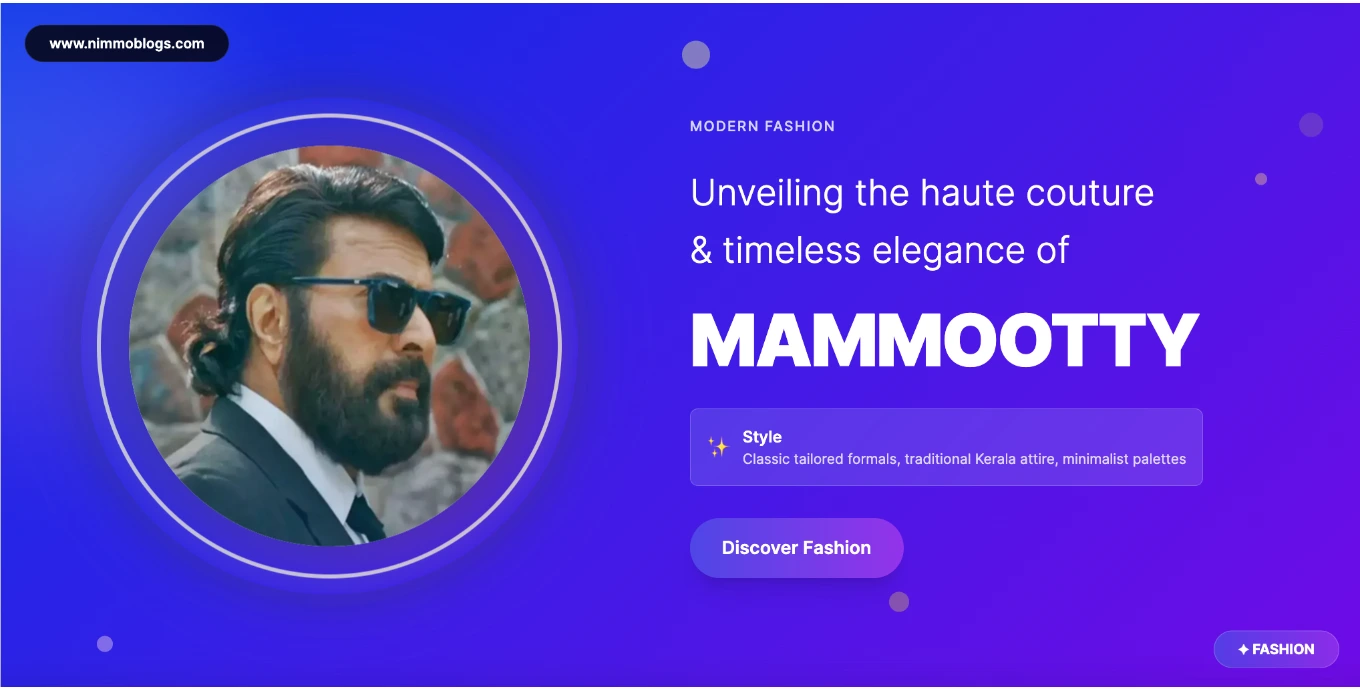
Mammootty's fashion sense reflects classic elegance over trendy statements. On screen, his costumes serve character rather than showcasing fashion. In historical roles, he wears period attire with authenticity. In contemporary films, he opts for understated formals, casual wear that suits middle-aged and older characters, and traditional Kerala attire when culturally appropriate. This commitment to character-appropriate costuming over vanity demonstrates his actor-first approach.
Off-screen, Mammootty maintains a signature style—sharp tailored suits for formal events, crisp shirts and trousers for casual appearances, and elegant traditional Kerala attire (mundu and shirt) for cultural occasions. His fashion choices emphasize quality, fit, and appropriateness over flashy statements. This classic approach has made him a style icon for mature men in Kerala, proving that elegance doesn't require youth or excessive styling.
His grooming is meticulous—well-maintained hair (now naturally graying, which he embraces rather than dyeing), clean-shaven or with neatly trimmed beard depending on role requirements, and understated accessories. Unlike some stars who use jewelry and accessories for attention, Mammootty opts for minimal, tasteful pieces—a watch, perhaps a ring—allowing his presence rather than adornments to command attention.
Aging Gracefully: The 70s Renaissance
What's particularly noteworthy is how Mammootty has handled aging—not fighting it desperately but embracing it strategically. He allows his hair to gray naturally, doesn't resort to obvious cosmetic procedures, and chooses roles appropriate to his age rather than attempting to play characters decades younger. Yet this acceptance doesn't mean resignation—his fitness regimen ensures he can still handle physical roles, his discipline maintains his screen presence, and his craft deepens with experience.
His approach offers a masterclass in aging in cinema. Rather than becoming irrelevant, he has become more valuable—bringing gravitas, experience, and authenticity to roles that younger actors couldn't credibly inhabit. His recent success demonstrates that audiences appreciate authentic aging over desperate youth-chasing, mature performances over gimmicks, and earned authority over manufactured coolness.
Mammootty's Awards & Honors
Mammootty's trophy cabinet reflects one of Indian cinema's most decorated careers, spanning national honors, state awards, industry recognitions, and civilian decorations. His three National Film Awards for Best Actor place him among an elite group of Indian actors, while his extensive state and industry awards demonstrate both critical acclaim and popular approval across five decades.
Major National & Civilian Honors
| Year | Award | Category/Film | Significance |
|---|---|---|---|
| 1989 | National Film Award | Best Actor - Oru Vadakkan Veeragatha | First National Award; historical epic |
| 1990 | National Film Award | Best Actor - Mathilukal | Consecutive win; literary adaptation |
| 1999 | National Film Award | Best Actor - Dr. Babasaheb Ambedkar | Third award; biographical masterpiece |
| 1998 | Padma Shri | Civilian Honor | 4th highest civilian award by Govt. of India |
| 2022 | Kerala Prabha | State Honor | Kerala's highest cultural honor |
The National Film Awards, given by India's Directorate of Film Festivals under the Ministry of Information and Broadcasting, represent the country's highest film honors. Winning three Best Actor awards—for Oru Vadakkan Veeragatha (1989), Mathilukal (1990), and Dr. Babasaheb Ambedkar (1999)—places Mammootty in exclusive company. What's remarkable is the diversity of these winning performances: a historical warrior, a political prisoner in a literary adaptation, and a biographical portrayal of India's constitutional architect. This range demonstrates that his National Awards weren't flukes but recognition of sustained excellence across genres.
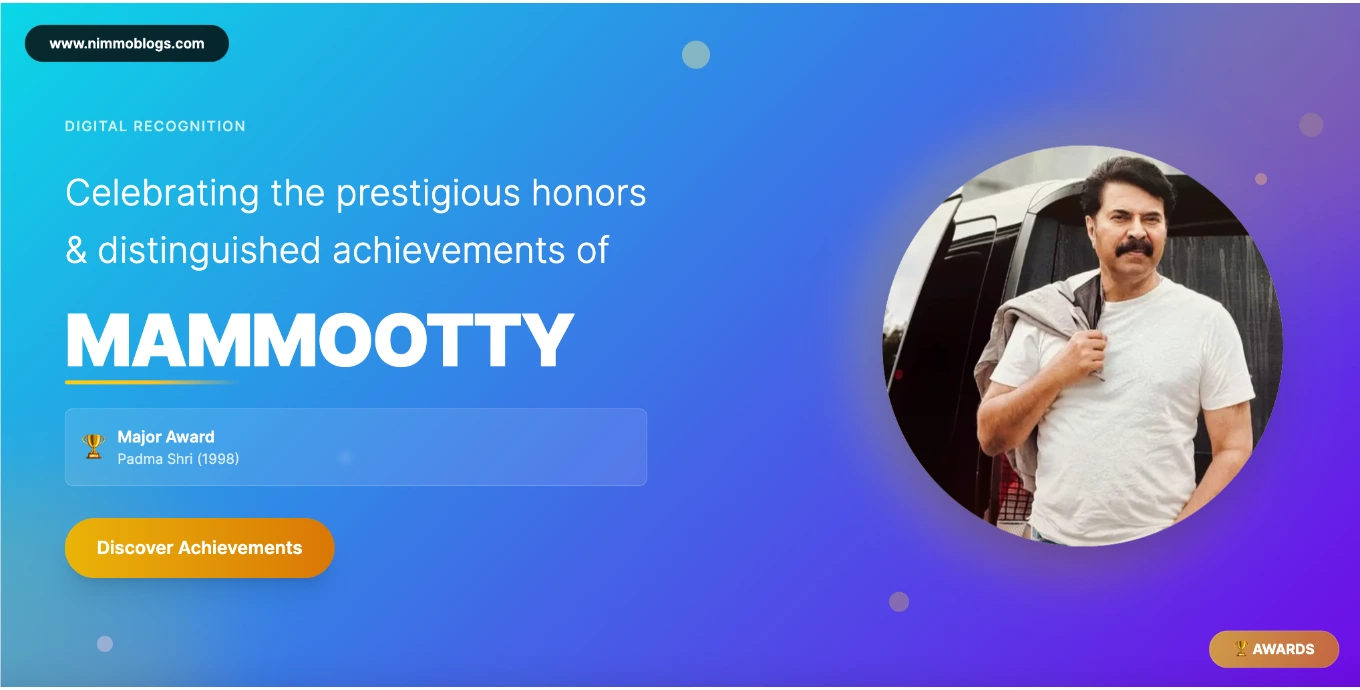
The Padma Shri, conferred in 1998, is India's fourth-highest civilian award (after Bharat Ratna, Padma Vibhushan, and Padma Bhushan). Receiving this honor before age 50 and in the midst of his career peak reflected the government's recognition of his cultural contributions. Unlike many Padma awardees who receive honors late in life as lifetime achievement recognition, Mammootty's relatively early conferment acknowledged his transformative impact on Indian cinema while still actively working.
The Kerala Prabha (2022), Kerala state's highest cultural honor, came as a culmination of over five decades of contributions to Malayalam cinema and culture. This award, rarely given and highly prestigious within Kerala, recognizes not just artistic excellence but overall cultural impact—acknowledging Mammootty's role in elevating Malayalam cinema's status, mentoring new talent, and serving as cultural ambassador globally.
State & Industry Awards
| Award Body | Recognition | Years |
|---|---|---|
| Kerala State Film Awards | Best Actor (Multiple wins) | 1984, 1985, 1989, 1993, 1997, 2007, 2010 (and others) |
| Filmfare Awards South | Best Actor - Malayalam (Multiple) | 1989, 1990, 1991, 1994, 1997, 2010, 2015 (and others) |
| Asianet Film Awards | Various categories including Lifetime Achievement | Multiple years |
| Vanitha Film Awards | Best Actor (Multiple) | Various years |
| SIIMA Awards | Best Actor - Malayalam | Multiple years |
Kerala State Film Awards, given by the Kerala state government's Department of Cultural Affairs, carry immense prestige within the Malayalam film industry. Mammootty's multiple Best Actor wins across decades—from the 1980s through 2010s—demonstrate sustained excellence recognized by expert juries comprising critics, scholars, and industry veterans. Unlike popularity-based awards, state awards prioritize artistic merit, making Mammootty's extensive collection particularly significant.
His Filmfare Awards South collection showcases popular and industry recognition beyond governmental bodies. Filmfare, while sometimes criticized for Bollywood bias, maintains separate South Indian awards recognizing Tamil, Telugu, Kannada, and Malayalam cinema. Mammootty's Alayalam Best Actor wins across three decades, proving his dual appeal—critical excellence combined with industry and audience approval.
International Recognition & Academic Honors
Beyond formal awards, Mammootty has received numerous international recognitions, including honors at film festivals, cultural organizations, and diaspora communities worldwide. Perhaps most uniquely, in 2025, Maharaja's College, Ernakulam (his alma mater) included his life and career in their BA History syllabus under the course "History of Malayalam Cinema." This academic incorporation—rare for living actors—represents perhaps the ultimate recognition: transition from entertainment figure to legitimate subject of scholarly study, from performer to cultural artifact worthy of historical analysis.
This academic recognition reflects Mammootty's impact beyond entertainment. His career trajectory—from village boy to law graduate to accidental actor to national icon—offers insights into Kerala's social mobility, cultural evolution, and cinema's role in identity formation. His filmography serves as primary source material for studying Malayalam society's changes from the 1970s through the 2020s. His performances in films addressing caste (Ponthan Mada), religious identity, political corruption (The King), and social reform (Dr. Babasaheb Ambedkar) make him relevant to multiple academic disciplines beyond cinema studies.
Mammootty's Latest Projects & Recent Work
The Remarkable 70s Renaissance (2022-2025)
Mammootty's recent work represents not just career continuation but career renaissance—a phenomenon rare in any cinema. At an age when most actors retire or accept reduced roles, he has delivered some of his most commercially successful and physically demanding performances, redefining what's possible for septuagenarian actors in Indian cinema.
Bheeshma Parvam (2022), directed by Amal Neerad, became a cultural phenomenon. Playing Michael, an aging gangster patriarch managing family dynamics and underworld politics, Mammootty delivered a performance combining menace, vulnerability, and unexpected tenderness. The film's stylized violence, period setting (1980s-90s), and Mammootty's commanding presence created a gangster epic that critics compared favorably to Hollywood's genre classics. Its massive commercial success—grossing over $7.2 million (₹60 crore)—proved that quality Malayalam cinema with proper marketing could achieve blockbuster status.
Kannur Squad (2023) took this renaissance further. As George, leader of a police investigation team pursuing criminals across state borders, Mammootty performed action sequences, chase scenes, and physically demanding shoots that would challenge actors half his age. The film's procedural authenticity, Mammootty's intense performance, and tight direction made it one of 2023's biggest Malayalam hits, crossing $12 million (₹100 crore)—a milestone rare for non-pan-Indian Malayalam films. For US context, this would be equivalent to a regional American film (say, a Texas-specific production) grossing $100 million nationally—unprecedented and remarkable.
Current & Upcoming Projects
| Project | Director | Production | Status | Expected Release |
|---|---|---|---|---|
| Upcoming Malayalam film | Select A-list directors | Mammootty Kampany/Others | Pre-production/Filming | 2025-2026 |
| Production ventures | Various new directors | Playhouse/Mammootty Kampany | Development | TBA |
As of 2025, Mammootty maintains an active project slate, with multiple films in various production stages. Unlike many senior actors who work sporadically, he continues full-time engagement with cinema—reading scripts, meeting directors, and selecting projects that challenge him artistically while maintaining commercial viability. His production companies are simultaneously developing multiple projects, backing new directors and unconventional narratives that might otherwise struggle to find funding.
Future Outlook & Industry Position
At 74, Mammootty occupies a unique position in Indian cinema—elder statesman whose box office pull rivals younger stars, cultural icon whose mere presence elevates projects, and mentor whose support can make careers. Directors across generations seek to work with him, knowing that his involvement brings not just star power but performance excellence, professional discipline, and audience trust.
The streaming revolution has extended Mammootty's reach beyond Kerala. His recent films debut simultaneously in theaters and OTT platforms, his classic films are being digitally remastered with improved subtitles, and international audiences are discovering his extensive back catalog. For US-based viewers exploring South Indian cinema, Mammootty's filmography offers an education in acting craft spanning five decades—from early commercial films through award-winning performances to his current renaissance work.
Industry observers predict Mammootty will continue working as long as health permits, following the model of international legends like Clint Eastwood, who directed and acted in acclaimed films well into his 90s. His disciplined lifestyle, selective project choices, and evident passion for cinema suggest many more years of quality work. The question isn't whether he'll continue but what new boundaries he'll push and what new generations of filmmakers will benefit from collaborating with him.
Mammootty's Public Image & Industry Standing
Dignified Public Persona
Mammootty is renowned for maintaining one of Indian cinema's most dignified and controversy-free public images across five decades—a remarkable achievement in an industry where scandals, feuds, and controversies are almost occupational hazards. His approach to fame combines accessibility with boundaries, warmth with professionalism, and engagement without exploitation.
Unlike some contemporaries who court controversy for publicity or engage in public feuds, Mammootty has consistently avoided unnecessary drama. When media attempts to create controversies—whether about industry rivalries (particularly with Mohanlal), political stances, or personal matters—he typically responds with measured statements or dignified silence. This restraint reflects both personal temperament and strategic wisdom: understanding that longevity requires reputation protection and that quality work speaks louder than manufactured headlines.
Professional Relationships & Industry Respect
Within the industry, Mammootty enjoys universal respect. Directors appreciate his professionalism—arriving prepared, understanding their vision, contributing creatively without ego clashes, and delivering performances efficiently. Producers value his bankability and reliability. Technicians respect his collaborative approach and consideration for their work. Junior artists and crew members benefit from his reportedly egalitarian set behavior, treating everyone with respect regardless of position.
His relationship with Mohanlal deserves special The mediaediaon. Media has long framed them as rivals—the two biggest Malayalam stars of their generation inevitably compared, contrasted, and pitted against each other. However, both actors have consistently maintained mutual respect, occasionally collaborating in multi-starrers and publicly praising each other's work. Their mature handling of media-created rivalry demonstrates professionalism and understanding that Malayalam cinema benefits from both their successes rather than manufactured competition.
Social & Political Engagement
Mammootty maintains carefully calibrated public engagement on social and political issues. He avoids partisan political affiliations, allowing him to work across administrations and maintain universal appeal. When he does speak on issues—usually related to education, healthcare, disaster relief, or cultural preservation—his statements are measured, thoughtful, and focused on solutions rather than controversy.
His approach to religion reflects Kerala's syncretic traditions. As a practicing Muslim who works across religious boundaries, portrays characters of all faiths with equal respect, and maintains friendships irrespective of religion, he embodies the religious harmony that Kerala (despite occasional tensions) largely maintains. This balanced approach has helped him avoid the communal controversies that sometimes affect Indian public figures.
Rare Public Debates
While largely controversy-free, Mammootty hasn't been entirely immune to public debates. Occasional industry discussions about star remuneration, Malayalam cinema's commercial direction, and generational transitions have involved him peripherally. However, these debates typically concern industry dynamics rather than personal scandals, and Mammootty's responses have generally been dignified and focused on cinema's welfare rather than personal defensiveness.
His long career without major scandals, legal issues, or public meltdowns is itself noteworthy. In an era when celebrity missteps go viral instantly and careers can implode overnight, Mammootty's sustained clean image reflects careful personal conduct, professional discipline, and perhaps the wisdom that comes from starting cinema later in life (after legal training and marriage) rather than as a teenager unprepared for fame's pressures.
Mammootty's Interesting Facts & Trivia
Beyond the awards and box office numbers, Mammootty's life contains numerous fascinating details that reveal the person behind the persona and the journey behind the legend.
- Legal Background: Mammootty earned an LL.B. (Bachelor of Laws) from Government Law College, Ernakulam, and briefly practiced law in Manjeri before transitioning to cinema. This legal training gave him analytical skills, attention to textual detail, and an understanding of human motivations that enriched his acting craft. He remains one of the few major Indian actors with a formal legal education.
- Late Bloomer: Unlike many stars who debut in their teens or early twenties, Mammootty's first credited film role came at nearly 30 (Vilkkanundu Swapnangal, 1980), and his first lead role at 30 (Thrishna, 1981). His stardom arrived in his mid-30s with New Delhi (1987). This late start meant he brought maturity, life experience, and professional discipline to his career from the beginning.
- Stage Name Origin: "Mammootty" is a combination of "Mammu" (derived from Muhammad) and "kka" (an affectionate Malayalam suffix meaning "big brother"), becoming "Mammukka" in fan usage. The name reflects both his Muslim identity and his elder-brother image among fans and colleagues.
- Television Executive: As chairman of Malayalam Communications, Mammootty oversees Kairali TV, Kairali News, and Kairali We television channels. This makes him one of the few Indian actors who operate television networks, ensuring Malayalam content reaches global diaspora audiences while maintaining editorial control over quality programming.
- Production Pioneer: His production companies—Playhouse and Mammootty Kampany—have backed numerous successful and experimental films. Unlike vanity production houses, these banners actively develop quality content, support new directors, and take creative risks that mainstream producers avoid, contributing significantly to Malayalam cinema's artistic evolution.
- Academic Recognition: In 2025, Maharaja's College, Ernakulam (his al, ma mater) included Mammootty's life and career in their BA History syllabus under "History of Malayalam Cinema." This makes him one of the rare living actors whose biography is a formal academic curriculum, studied alongside historical figures and cultural movements.
- Multilingual Mastery: Though primarily a Malayalam actor, Mammootty has delivered acclaimed performances in Tamil (Thalapathi), Telugu (Swathi Kiranam), and remarkably, in English and Hindi (Dr. Babasaheb Ambedkar)—languages he wasn't native to. His third National Award came for an English-Hindi bilingual, demonstrating his linguistic adaptability.
- Franchise King: The CBI series featuring his character Sethurama Iyer spans from Oru CBI Diary Kurippu (1988) through four films to CBI 5: The Brain (2022)—a 34-year franchise. Few Indian actors have sustained a single character this long while maintaining audience interest and box office viability.
- Fitness in the 70s: At 74, Mammootty maintains fitness levels allowing him to perform action sequences in films like Kannur Squad (2023). His disciplined lifestyle—regular gym workouts, yoga, controlled diet, and adequate rest—enables him to sustain physical roles that challenge younger actors, redefining age limitations in Indian cinema.
- Father-Son Dynamic: His son Dulquer Salmaan has become a successful pan-Indian actor, but their relationship avoids typical film-family nepotism. Mammootty never imposed cinema on Dulquer (who studied in the US and worked in business first) and advised him to forge his own path. They've never worked together in films, maintaining professional boundaries and allowing Dulquer to establish an independent identity.
- Selective Endorser: Unlike many stars who endorse numerous brands, Mammootty is highly selective about endorsements, preferring quality associations over quantity. This selectivity maintains his brand integrity and explains why his endorsements, though fewer, carry significant impact in Kerala and South Indian markets.
- Author: Mammootty published "Kazchappadu" (2007), a collection of essays and reflections on cinema, culture, and life. The book provides rare insights into his thought process, artistic philosophy, and perspectives on Malayalam cinema's evolution, demonstrating intellectual depth beyond performance.
- Record Collections: With 400+ films across five decades, Mammootty holds numerous records—most Kerala State Film Awards for an actor, most films in leading roles in Malayalam cinema, longest sustained stardom (1980s-2020s), and becoming oldest Malayalam actor to headline ₹100 crore+ grosser (Kannur Squad at 72).
- No Tattoos, Minimal Vanity: In an era when many actors undergo cosmetic procedures, Mammootty ages naturally—allowing his hair to gray, avoiding obvious surgical interventions, and choosing roles appropriate to his age rather than desperately clinging to youth. This authentic aging has actually enhanced his gravitas and audience respect.
- Disaster Relief Contributor: During Kerala's devastating floods (2018, 2019, 2021), Mammootty contributed significantly to relief efforts through donations and organizing aid, though he avoided publicizing these activities. This quiet philanthropy reflects traditional Islamic values of charity without ostentation and Kerala's culture of social responsibility.
|
Mammootty's Social Media & Fan Following
Mammootty maintains an active and authentic social media presence that balances accessibility with dignity—rare among actors of his generation and stature. His approach to digital platforms reflects the same discipline and thoughtfulness that characterizes his cinema career.
Digital Presence & Engagement
| Platform | Handle | Followers/Engagement | Content Style |
|---|---|---|---|
| @mammootty | 4+ million followers | Film promotions, personal moments, inspirational messages, fitness updates | |
| Twitter/X | @mammukka | 2.5+ million followers | Film updates, social commentary, fan interaction, cultural events |
| Mammootty Official | 8+ million likes | Film news, event coverage, fan tributes, official statements |
What distinguishes Mammootty's social media from many celebrities is its authenticity. His posts feel genuinely personal rather than PR-managed—whether sharing workout videos at 74, posting thoughtful messages on cultural occasions, or engaging with fans' concerns. This authentic voice has built strong digital community engagement despite his relatively late adoption of social media compared to younger actors.
His Instagram particularly showcases his fitness journey, with workout videos and gym sessions that inspire fans (especially older audiences) to prioritize health. These posts aren't vanity displays but genuine sharing of his disciplined lifestyle, making fitness accessible and aspirational for middle-aged and senior audiences who often feel excluded from fitness culture's youth obsession.
Fan Clubs & Community
Mammootty's fan following spans generations—from those who discovered him in the 1980s through fans who came to his work via recent films like Bheeshma Parvam or through his son Dulquer Salmaan. Fan clubs operate across Kerala, throughout India, and in diaspora communities worldwide, particularly in the Middle East, where large Malayali populations reside.
These fan communities engage in various activities beyond film promotion—organizing charitable initiatives, conducting blood donation drives, supporting educational programs, and coordinating theater bookings for new releases. The organic nature of this fandom, built over decades through theatrical experiences rather than manufactured social media hype, represents old-school celebrity culture where work creates connection rather than constant digital presence.
Cross-Generational Appeal
What's remarkable about Mammootty's fan base is its cross-generational nature. Grandparents who watched his 1980s films, their children who grew up with his 1990s-2000s work, and grandchildren discovering him through recent blockbusters all claim him as "their" star. This sustained relevance across age demographics is rare, suggesting that his appeal transcends generational preferences to connect with fundamental qualities—talent, dignity, consistency—that resonate universally.
International Recognition & US Diaspora
theAmong US-based Malayali diaspora, Mammootty represents cultural connection and nostalgia. His films are staples at community gatherings, cultural events, and family viewing. The availability of his work on Netflix, Amazon Prime Video, and Disney+ Hotstar has introduced him to non-Malayali American audiences interested in South Indian cinema, with many discovering that regional Indian films often deliver more nuanced storytelling than mainstream Bollywood offerings.
His social media engagement with international fans demonstrates understanding of diaspora's unique position—maintaining Kerala cultural identity while navigating American life. His messages during Onam, Vishu, Eid, and other festivals resonate particularly with diaspora communities seeking cultural anchoring in foreign lands.
Frequently Asked Questions About Mammootty
Personal Information
What is Mammootty's real name?
Mammootty's real name is Muhammad Kutty Panaparambil Ismail. He adopted the stage name "Mammootty" early in his acting career, which combines "Mammu" (derived from Muhammad) and the Malayalam affectionate suffix "kka" (meaning big brother). The name "Mammukka" (big brother Mammu) became his endearing nickname among fans and colleagues, reflecting both his Muslim identity and his elder-brother image in Malayalam cinema.
How old is Mammootty in 2025?
Mammootty is 74 years old as of 2025. He was born on September 7, 1951, in Chandiroor, Alappuzha district, Kerala, India. His zodiac sign is Virgo. Remarkably, despite being in his mid-70s, he continues to headline action films and demanding roles, delivering some of his career's most commercially successful performances in recent years with films like Bheeshma Parvam (2022) and Kannur Squad (2023).
Is Mammootty married? Who is his wife?
Yes, Mammootty has been married to Sulfath Kutty since May 1, 1979—a marriage spanning over 45 years. Sulfath comes from a traditional Malayali Muslim family and has largely remained away from public life throughout Mammootty's five-decade career, maintaining the privacy that both value. Their enduring marriage represents stability rare in the film industry, where relationships often become public spectacles. They maintain a close-knit family life based in Kochi, Kerala.
Does Mammootty have children?
Yes, Mammootty has two children. His daughter Surumi has stayed completely away from the film industry and public life, maintaining privacy. His son Dulquer Salmaan is a successful actor who debuted in 2012 and has established himself across Malayalam, Tamil, Telugu, and Hindi cinema. Interestingly, Mammootty never imposed a film career on Dulquer, who studied in the United States, worked in business, and only later chose acting independently. The father-son pair has never worked together in films, maintaining professional boundaries.
Where was Mammootty born?
Mammootty was born in Chandiroor, a village in Alappuzha district, Kerala, India. His family later moved to Chempu, near Vaikom in Kottayam district, where he spent most of his childhood and formative years. He currently resides in Kochi (formerly Cochin), Kerala's commercial capital, while maintaining strong connections to his hometown and rural roots despite decades of superstardom.
What is Mammootty's educational background?
Mammootty has a strong educational background. He completed schooling at Government High School Kulasekharamangalam and Government School Ernakulam, pursued pre-degree at Sacred Heart College Thevara, graduated with a Bachelor of Arts (BA) from Maharaja's College Ernakulam, and earned a Bachelor of Laws (LL.B.) from Government Law College Ernakulam. He briefly practiced law in Manjeri before transitioning to cinema. This legal training gave him analytical skills and textual attention to detail that enriched his acting craft, making him one of the few major Indian actors with formal legal education.
Career & Professional Life
How many National Film Awards has Mammootty won?
Mammootty has won three National Film Awards for Best Actor—for Oru Vadakkan Veeragatha (1989), Mathilukal (1990), and Dr. Babasaheb Ambedkar (1999). These awards, given by India's Directorate of Film Festivals, represent the country's highest film honors. What's remarkable is the diversity of these performances: a historical warrior, a political prisoner in a literary adaptation, and a biographical portrayal of India's constitutional architect, demonstrating his extraordinary range and versatility.
How did Mammootty start his acting career?
Mammootty's entry into cinema was gradual and unplanned. While practicing law in Manjeri in the early 1970s after earning his LL.B., he appeared in amateur theater and local cultural programs. This led to an uncredited appearance in Anubhavangal Paalichakal (1971). He continued dual life—law practice alongside occasional film roles—for nearly a decade. His first credited role came in Vilkkanundu Swapnangal (1980), first lead in Thrishna (1981), and a breakthrough with Athirathram (1984). Unlike most actors who enter cinema young, Mammootty started nearly at 30, bringing maturity and life experience from the beginning.
How many movies has Mammootty acted in?
Mammootty has acted in over 400 films across five decades (1971-2025), making him one of Indian cinema's most prolific actors. His filmography spans primarily Malayalam cinema but includes significant work in Tamil (Thalapathi), Telugu (Swathi Kiranam), Kannada, Hindi, and English (Dr. Babasaheb Ambedkar). This extensive body of work encompasses historical epics, literary adaptations, commercial entertainers, investigative thrillers, family dramas, biopics, and experimental cinema, demonstrating the remarkable versatility few actors achieve.
What are Mammootty's most famous movies?
Mammootty's most iconic films include Oru Vadakkan Veeragatha (1989) historical epic; Mathilukal (1990) literary adaptation; New Delhi (1987) crime thriller; the CBI series (1988-2022) detective franchise; The King (1995) political thriller; Thalapathi (1991) Tamil classic; Dr. Babasaheb Ambedkar (1999) biographical masterpiece; Chronic Bachelor (2003) comedy; Paleri Manikyam (2009) murder mystery; Bheeshma Parvam (2022) gangster drama; and Kannur Squad (2023) action thriller. These films showcase his range from commercial blockbusters to critically acclaimed art cinema.
Has Mammootty won the Padma Shri?
Yes, Mammootty was awarded the Padma Shri in 1998, India's fourth-highest civilian honor (after Bharat Ratna, Padma Vibhushan, and Padma Bhushan). Receiving this prestigious honor while still in his 40s and at career peak reflected the Government of India's recognition of his transformative impact on Indian cinema. He also received Kerala Prabha in 2022, Kerala state's highest cultural honor, acknowledging over five decades of contributions to Malayalam cinema and culture.
Is Mammootty still acting?
Yes, Mammootty remains highly active at 74, delivering some of his career's most successful performances in recent years. His films Bheeshma Parvam (2022) and Kannur Squad (2023) were massive blockbusters, with Kannur Squad grossing over $12 million (₹100 crore)—making him the oldest Malayalam actor to headline such a commercially successful film. He maintains a disciplined fitness regimen, allowing him to perform action sequences and demanding roles, redefining age limitations in Indian cinema. Multiple projects remain in various production stages for 2025-2026 releases.
Has Mammootty worked in Bollywood?
While primarily a Malayalam actor, Mammootty has worked in Hindi cinema, most notably in Dr. Babasaheb Ambedkar (1999), an English-Hindi bilingual biographical film that earned him his third National Award. However, unlike some South Indian actors who actively pursued Bollywood careers, Mammootty chose to remain primarily in Malayalam, am cinema, where he had creative control and cultural connection. His focus on Malayalam cinema didn't limit his recognition—his work's quality and awards brought pan-Indian respect without requiring Bollywood validation.
Financial & Net Worth
What is Mammootty's net worth in 2025?
Mammootty's estimated net worth is approximately $42 million (₹350 crore) as of 2025. His wealth comes from a prolific five-decade career spanning 400+ films, film production through Mammootty Kampany and Playhouse production banners, chairmanship of Malayalam Communications (operating Kairali TV network), selective brand endorsements in Kerala and South Indian markets, strategic real estate investments, and diversified business ventures. His disciplined financial management ensures wealth preservation alongside career earnings.
How much does Mammootty charge per movie?
Industry reports suggest Mammootty's remuneration ranges from $360,000 to $960,000 (₹3-8 crore) per film depending on project scale, production house, role scope, and commercial expectations. These figures place him among India's highest-paid actors, particularly impressive given he works primarily in Malayalam cinema, which operates on smaller budgets than Bollywood. His sustained ability to command top-tier fees at 74 reflects his continued box office viability, as recent blockbusters like Kannur Squad prove his films generate returns justifying premium compensation.
Does Mammootty own a production company?
Yes, Mammootty owns two production companies: Mammootty Kampany and Playhouse. Unlike vanity production houses that merely attach star names, these banners actively develop quality content, back new directors, and take creative risks mainstream producers avoid. Notable productions include Pathemari (2015) and various innovative projects that balance artistic vision with commercial viability. These ventures demonstrate his commitment to Malayalam cinema's artistic evolution beyond his personal acting career.
What is Malayalam Communications?
Malayalam Communications is a television network chaired by Mammootty, operating Kairali TV, Kairali News, and Kairali We channels. This network broadcasts Malayalam content globally, reaching diaspora audiences in the Middle East, Europe, and North America. As chairman, Mammootty oversees programming strategy, content quality, and the network's mission of Malayalam culture preservation and promotion, making him one of the few Indian actors who owns and operates television networks.
Personal & Lifestyle
What is Mammootty's fitness routine?
At 74, Mammootty maintains a disciplined fitness regimen including regular gym workouts, yoga, a controlled diet, and adequate rest. His Instagram often features workout videos showcasing his maintained physique and stamina. This discipline enables him to perform action sequences in films like Kannur Squad that would challenge younger actors. His fitness philosophy emphasizes functional health over aesthetic bodybuilding, longevity over short-term gains, and consistency over intensity—an approach that has sustained him across five decades while many contemporaries have health challenges.
Is Mammootty active on social media?
Yes, Mammootty maintains active presence on Instagram (@mammootty, 4+ million followers), Twitter/X (@mammukka, 2.5+ million followers), and Facebook (8+ million likes). His social media approach balances accessibility with dignity—posting film updates, personal moments, fitness content, inspirational messages, and engaging with fans while maintaining boundaries. HisaHis authentic,ce rat,h er tPR-managednage,d content a has built a strong digital community engagement despite relatively late social media adoption compared to younger actors.
What languages does Mammootty speak?
Mammootty is fluent in Malayalam (native language), English (educated in English-medium institutions), and Hindi (learned for films). He has also worked in Tamil, Telugu, and Kannada cinema, demonstrating linguistic adaptability. His third National Award came for Dr. Babasaheb Ambedkar, performed in English and Hindi—languages he wasn't native to—showcasing his ability to master linguistic nuances for authentic performances across Indian languages.
What is Mammootty's religion?
Mammootty is a Muslim, born into a Malayali Muslim family. However, he maintains a personal and private approach to faith, avoiding mixing religion with profession or using it for image-building. He works across religious festivals, portrays characters of all faiths with equal respect, and maintains friendships irrespective of religious boundaries—reflecting Kerala's syncretic cultural traditions where religious plurality is deeply embedded in the social fabric. His balanced approach has helped him maintain universal appeal across communities.
Comparisons & Context
How does Mammootty compare to Mohanlal?
Mammootty and Mohanlal are Malayalam cinema's two biggest stars, often compared but with distinct strengths. Mammootty is known for gravitas, intensity, and commanding screen presence, excelling in roles requiring authority (CBI series, The King). Mohanlal is celebrated for versatility, natural acting, and effortless performance across genres. Both have three National Awards, extensive filmographies, and sustained stardom across the decades. Mediaa cr ted rivala narratives, but both maintain mutual respect, occasional collaborations, and understanding that Malayalam cinema benefits from both rather than manufactured competition.
Is Mammootty popular outside Kerala?
Yes, while Mammootty's primary fan base is Kerala and the Malayali diaspora, his work has pan-Indian recognition. His Tamil films (particularly Thalapathi), Telugu work, and Hindi-English bilingual (Dr. Babasaheb Ambedkar) introduced him to broader audiences. His National Awards and Padma Shri brought national recognition. However, unlike actors who actively pursued pan-Indian stardom, Mammootty chose to remain primarily in Malayalam cinema, achieving quality and cultural connection over geographic expansion. Streaming platforms have now extended their reach to international audiences discovering Malayalam cinema.
Why is Mammootty called "Mammukka"?
"Mammukka" combines "Mammu" (derived from Muhammad, his real name) and "kka" (Malayalam suffix meaning "big brother"). The name reflects both his Muslim identity and his elder-brother image among fans and colleagues. It's used affectionately by fans, industry members, and media, signifying respect and endearment simultaneously. The name captures his position in Malayalam cinema—not just a star but a respected elder figure, mentor, and cultural icon whom people look up to with familial warmth rather than distant celebrity worship.
What makes Mammootty's career unique?
Several factors make Mammootty's career distinctive: starting cinema late (nearly 30) after legal education and practice; winning three National Awards for vastly different performances; sustaining stardom across five decades from 1980s-2020s; maintaining controversy-free public image across 50+ years; delivering career-best box office at 74; owning television networks alongside acting; backing quality cinema through production companies; achieving academic recognition (included in university syllabus); and redefining age limitations by headlining action blockbusters in his 70s. This combination of longevity, versatility, business acumen, and sustained relevance is unparalleled in Indian cinema.
Cultural Context for US Audiences
What is Malayalam cinema's place in the Indian film industry?
Malayalam cinema (the films in Malayalam language, primarily from Kerala state) opea rates on a smaller scale than Bollywood but enjoys disproportionate critical acclaim, often winning more National Awards. While Bollywood blockbusters collect $60-120 million, Malayalam films collecting $12 million are massive hits. However, Malayalam cinema is known for realistic storytelling, strong literary influences, and artistic merit. For US audiences, it's comparable to independent American cinema versus Hollywood blockbusters—smaller budgets but often superior quality, nuance, and cultural authenticity.
Can I watch Mammootty movies without speaking Malayalam?
Yes, many Mammootty films are available on Netflix, Amazon Prime Video, and Disney+ Hotstar with English subtitles. Classics like Oru Vadakkan Veeragatha, Mathilukal, and recent hits like Bheeshma Parvam and Kannur Squad offer subtitle options. His performance quality transcends language—expressions, body language, and presence communicate even without understanding dialogue. For US audiences exploring South Indian cinema, Mammootty's filmography offers education in acting craft spanning five decades, from commercial entertainers to award-winning art cinema.
Why should US audiences watch Mammootty's films?
Mammootty's work offers several values for US audiences: witnessing one of world cinema's finest actors across 400+ films; understanding Indian cinema's diversity beyond Bollywood stereotypes; exploring Kerala's history, culture, and social evolution through his varied roles; appreciating sustained excellence across five decades (comparable to American legends like Robert De Niro or Al Pacino); seeing how regional cinema often delivers more nuanced storytelling than mainstream; and discovering that age need not limit artistic vitality—his recent work at 74 redefines what's possible for older actors globally.

|
Last Updated: November 18, 2025
Related Articles
Explore the journeys of remarkable individuals who continue to inspire across industries and cultures with their unique contributions.
- Parvathy Thiruvothu Biography, Age, Net Worth, Height, Movies & Facts
- Prithviraj Sukumaran Biography, Age, Net Worth, Height, Movies & Facts
- Asin Thottumkal Biography, Age, Net Worth & Movies
- Dileep Biography, Age, Net Worth, Height, Movies & Facts
- Nivin Pauly Biography, Age, Net Worth, Height, Movies & Facts
- Amala Paul Biography: Age, Net Worth, Movies & Facts
- Vijay Deverakonda Biography, Age, Net Worth, Height, Movies & Facts
- Naga Chaitanya Biography, Age, Net Worth, Height & Movies
- Aruna Vijay Biography, Age, Career, MasterChef India & Facts
- Jahnavi Dasetty Biography, Age, Net Worth & Career
- Sadhique Aboobacker Biography, Age, Height, Instagram & Facts
- Madan Gowri Biography, Age, YouTube Channel, Net Worth & Facts
- Sivaangi Krishnakumar Biography, Age, Net Worth, Height
- Shanmukh Jaswanth Biography, Age, Net Worth, Height & Career
- Ahaana Krishna Biography, Age, Net Worth & Movies
- Pearle Maaney Biography, Age, Net Worth, Height & Movies
- Alya Manasa Biography, Age, Net Worth, Height, Movies & Facts
- Keerthi Shrathah Biography, Age, Net Worth, Height & Facts
- Pradaini Surva Biography, Age, Net Worth, Height, Movies & Facts
- Deepika Pilli Biography, Age, Net Worth, Height & Facts
For more celebrity biographies from Malayalam, Tamil, Telugu, and Bollywood cinema, visit our complete celebrities section.

Goal Setting: How To Set Goal In Life

Podcast: How To Cancel Spotify Premium

Podcast: Podcast That Should Listen

Podcast: What Is Google Podcast
Podcast: What Is Podcast And How Does It Works

Time Management: Good Time Management Skills

Time Management: How To Improve Time Management Skills

Top 25 Ways To Increase Productivity

Robotics: What Is Robotics And How Does It Work

Positive Thoughts: Positive Thoughts Can Change Your Life

How To Become Rich With No Money

Top 5 Ways To Become A Rich

Communication: Top 7 Ways To Communicate Effectively

Personality Development Tips For Men

Personality Development Tips For Woman
©2026 Nimmoblogs
All Right Reserved.
Made with
 by Hina Aggarwal