 Actress
Parvathy Thiruvothu Biography, Age, Net Worth, Height, Movies & Facts
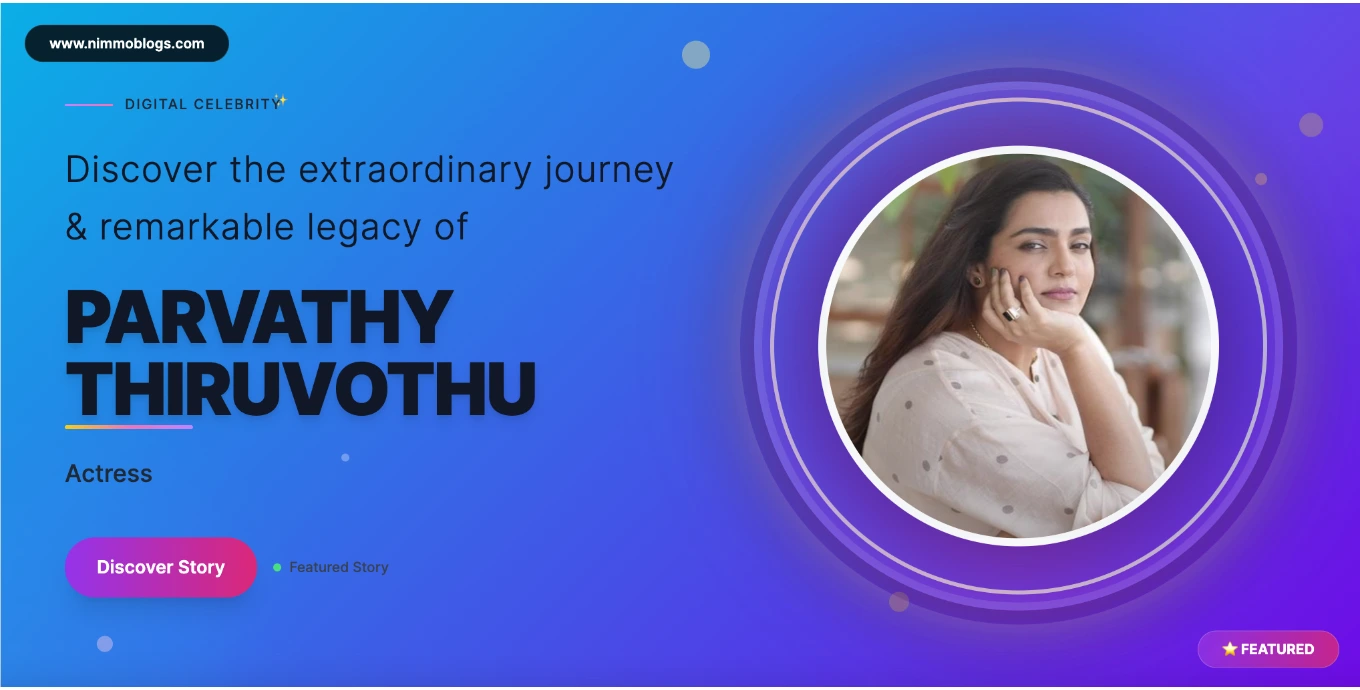
Parvathy Thiruvothu stands as one of Indian cinema's most compelling voices—an actress who refuses to compromise artistic integrity for commercial convenience, a feminist icon who co-founded the Women in Cinema Collective (WCC), and a performer whose every role carries emotional weight and social consciousness. At 37 years old, she represents a new generation of Indian actors choosing substance over superficiality, using their platform for advocacy alongside entertainment.
Born in Kozhikode (Calicut), Kerala, into a family of practicing lawyers, Parvathy brought intellectual rigor to her craft from the beginning. Her journey from supporting roles in Malayalam cinema to becoming a National Award-winning actress spans multiple languages—Malayalam, Tamil, Kannada, and Hindi—each performance marked by meticulous preparation and deep character understanding. Unlike many contemporaries chasing star status, Parvathy deliberately chose character-driven narratives that challenge societal norms and explore complex women's experiences.
Her filmography reads like a masterclass in meaningful cinema: the raw rural drama Poo (2008) that announced her Tamil arrival with a Filmfare Award, the blockbuster ensemble Bangalore Days (2014), the epic romance Ennu Ninte Moideen (2015), the cult favorite Charlie (2015), the politically urgent Take Off (2017) that earned her National recognition, and the inspiring Uyare (2019) about an acid attack survivor's resilience. Each film demonstrates her commitment to portraying women as multidimensional human beings rather than decorative additions to male-centric narratives.
For American audiences discovering Indian cinema through streaming platforms like Netflix, Amazon Prime Video, and SonyLIV, Parvathy offers an entry point into India's thriving independent and women-centric cinema movement. Her work parallels Western actresses like Frances McDormand or Natalie Portman—performers who balance commercial viability with artistic ambition and use celebrity status for social advocacy. Her vocal stance on gender equality, workplace safety, and the #MeToo movement in Indian cinema has made her both celebrated and controversial, earning admiration from progressives while facing backlash from conservative segments.
| Real Name | Parvathy Thiruvothu Kottuvattaa |
|---|---|
| Nick Name | Parvathy |
| Profession | Actress, Advocate |
| Date of Birth | April 7, 1988 |
| Age | 37 years (as of 2025) |
| Birth Place | Kozhikode (Calicut), Kerala, India |
| Height | 5 feet 5 inches / 165 cm |
| Weight | 121 lbs / 55 kg (approx.) |
| Net Worth | Not publicly disclosed |
| Marital Status | Unmarried |
| Children | None |
| Nationality | Indian |
| Zodiac Sign | Aries |
| Education | B.A. in English Literature |
Table of Contents
- Parvathy Thiruvothu's Bio
- Early Life & Education
- Personal Life & Values
- Career Journey & Breakthrough
- Net Worth & Financial Success
- Movies & Critical Acclaim
- Physical Appearance & Style
- Awards & Recognition
- Women in Cinema Collective & Advocacy
- Controversies & Challenges
- Interesting Facts & Trivia
- Social Media Presence
- Frequently Asked Questions
- Related South Indian Cinema Articles
Parvathy Thiruvothu's Bio
Parvathy Thiruvothu Kottuvattaa, known professionally as Parvathy, represents a paradigm shift in Indian cinema—an actress whose career choices consistently prioritize artistic merit and social relevance over commercial calculations. Her reputation extends beyond mere acting talent; she's recognized for intellectual depth, unwavering principles, and willingness to sacrifice professional opportunities rather than compromise personal values. This integrity has made her a role model for young women across India seeking alternatives to Bollywood's often regressive portrayals of femininity.
|
Born into an intellectually stimulating environment—both parents practicing lawyers in Kerala—Parvathy developed critical thinking and articulate expression from childhood. This background distinguishes her from many actors who enter cinema through family connections or modeling careers. Her formal education in English Literature at All Saints College, Thiruvananthapuram, combined with training in Bharatanatyam (classical Indian dance), equipped her with analytical frameworks for understanding narratives and physical discipline for embodying characters.
What sets Parvathy apart in an industry often criticized for shallow performances is her method-like approach to roles. She immerses herself in character research—reading extensively, meeting real people whose experiences inform her portrayals, and undergoing physical transformations when scripts demand. For Take Off, she spent time understanding the psychological trauma of nurses trapped in conflict zones. For Uyare, she met acid attack survivors, comprehending their journey from victim to survivor to thriver. This dedication produces performances that feel authentic rather than acted.
Her screen presence combines girl-next-door relatability with unexpected emotional power. Directors consistently praise her preparation, collaborative spirit, and ability to elevate scripts through nuanced interpretation. Unlike actors who rely solely on natural charm, Parvathy brings technical proficiency—understanding camera angles, lighting, and editing rhythms to modulate performances appropriately. This craft knowledge, combined with innate talent, explains her sustained critical acclaim across diverse roles and languages.
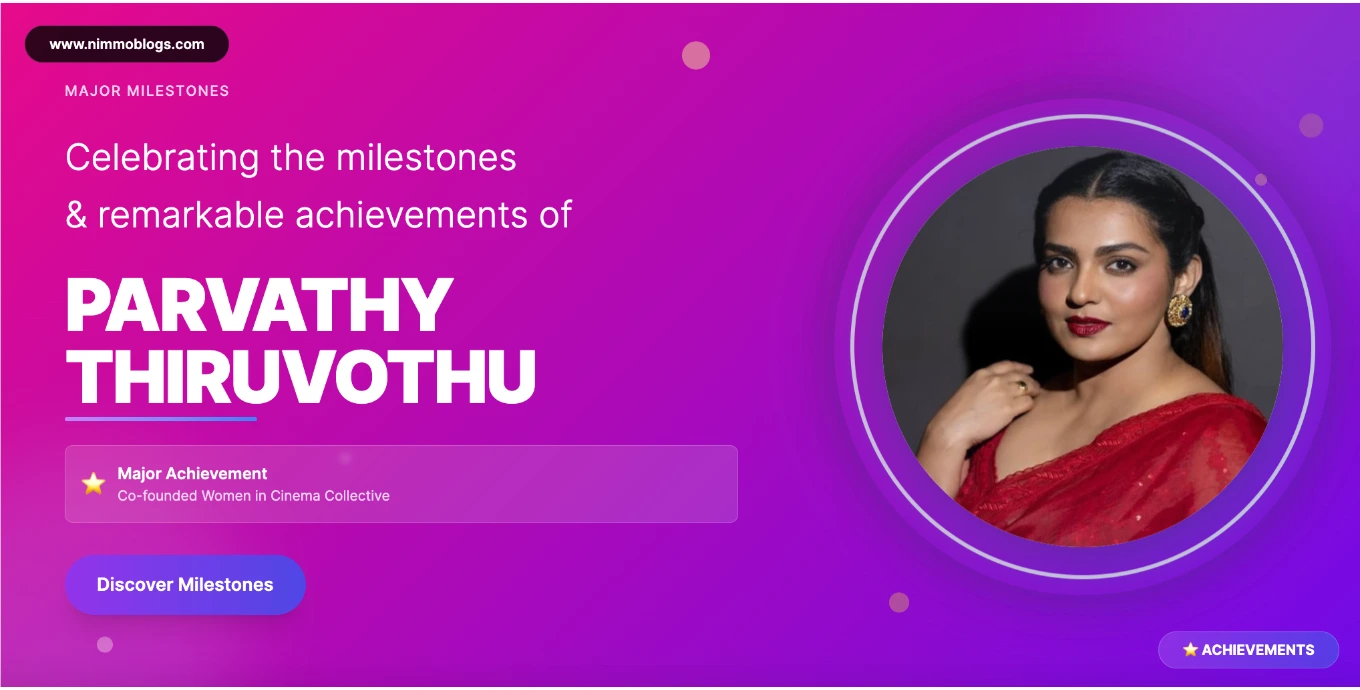
Beyond acting, Parvathy has emerged as Indian cinema's most vocal feminist advocate. Co-founding the Women in Cinema Collective in 2017 following the Kerala actress assault case, she's consistently spoken about workplace harassment, pay disparity, and regressive female representation in films. This advocacy has cost her professionally—certain producers and actors refuse to work with her, viewing her outspokenness as troublesome. Yet she persists, believing that temporary career setbacks matter less than long-term industry transformation toward gender equality and dignity.
Like other socially conscious performers such as Swara Bhaskar and Richa Chadha, Parvathy has carved a unique niche transcending conventional stardom. However, her combination of critical acclaim, multilingual success, and fearless advocacy makes her particularly significant for understanding contemporary Indian cinema's evolution toward more progressive, woman-centric storytelling that challenges traditional patriarchal narratives.
Parvathy Thiruvothu's Early Life & Education
Childhood & Family Background
Parvathy Thiruvothu was born on April 7, 1988, in Kozhikode (Calicut), a coastal city in northern Kerala known for its historical significance as a major trading port and cultural hub. Her father, P. Vinod Kumar, and mother, T. K. Usha Kumari, are both practicing lawyers—a profession requiring analytical thinking, articulate expression, and principled stands. This legal background profoundly influenced Parvathy's worldview, instilling values of justice, equality, and courage to question authority when necessary.
Growing up in a household where dinner table conversations likely involved legal precedents, social justice issues, and constitutional principles created an intellectually stimulating environment. Unlike many Indian families discouraging daughters from careers, particularly in unpredictable fields like cinema, Parvathy's parents supported her artistic interests while ensuring a strong academic foundation. This balance between creative encouragement and intellectual rigor shaped her approach to acting as a serious craft rather than a mere glamorous profession.
She has one brother, Aum Thiruvothu Karunakaran, who maintains private life away from public attention. The family's preference for privacy despite Parvathy's celebrity status reflects Kerala's relatively understated approach to fame compared to Bollywood's flashy star culture. This grounded family environment helped Parvathy navigate cinema's temptations and pressures without losing perspective or compromising core values.
Kerala's cultural landscape—with its high literacy rates, politically aware population, and strong tradition of social reform movements—provided fertile ground for developing Parvathy's critical consciousness. The state has historically been progressive on women's issues compared to many Indian regions, though patriarchy persists in subtle forms. Growing up observing these contradictions—educated, professional women still facing gendered expectations—likely informed her later advocacy for systemic change in cinema's treatment of women.
Educational Journey & Early Training
Parvathy completed her schooling at Kendriya Vidyalaya, Pangode, in Thiruvananthapuram (Kerala's capital). Kendriya Vidyalayas are central government schools known for a standardized national curriculum, emphasis on holistic development, and relatively affordable quality education. Her school years were marked by academic diligence and active participation in cultural activities—drama, debate, and dance competitions that developed her performance skills and public speaking confidence.
Parallel to formal education, Parvathy trained in Bharatanatyam, one of India's classical dance forms originating from Tamil Nadu. Bharatanatyam demands years of rigorous practice, combining physical discipline (precise footwork, hand gestures, facial expressions) with storytelling through movement. This training proved invaluable for her acting career—providing body awareness, understanding of rhythm and timing, and ability to convey emotions through physical expression without dialogue.
During college years, Parvathy actively participated in theater and campus cultural festivals, honing performance skills in live settings where mistakes can't be edited out. Theater training develops different muscles than film acting—projecting for live audiences, maintaining energy through complete performances without retakes, and responding to fellow actors' improvizations. This is the foundation latera a enabled smooth transition to cinema's technical demands while retaining theater's emotional authenticity.
Her entry into cinema wasn't through typical channels—no film family connections, modeling career, or beauty pageant wins. Instead, she was discovered during college, cultural fest performances, leading,g to her debut film opportunity. This organic entry based on talent rather than connections shaped her subsequent career philosophy: choosing roles for artistic merit rather than merely chasing stardom or commercial success.
Parvathy Thiruvothu's Personal Life & Values
Marital Status & Lifestyle Choices
Parvathy Thiruvothu is currently unmarried and has no children, focusing her energies on career, advocacy work, and personal growth. In Indian contexts where marriage pressure on women intensifies through their twenties and thirties, her choice to remain single presents qa uiet rebellion against societal expectations. She's rarely discussed personal relationships publicly, maintaining firm boundaries between public persona and private life—a rarity among Indian celebrities whose romances often become tabloid fodder.
Her lifestyle reflects conscious ethical choices that align actions with values. After 2015, Parvathy transitioned to vegetarianism and eventually an anti-animal product-based diet, avoiding animal products. This decision wasn't merely health-driven but rooted in ethical considerations about animal welfare and environmental sustainability. She occasionally discusses these choices on social media, encouraging followers toward more conscious consumption without preachy moralizing.
| Marital Status | Unmarried |
|---|---|
| Children | None |
| Dietary Preference | Plant-based / Vegan (since ~2015) |
| Residence | Kerala, India |
| Hobbies | Dancing, Reading, Travel, Advocacy work |
| Interests | Gender equality, Literature, Social impact cinema, Environmental sustainability |
| Spiritual Practice | Personal, undisclosed (Hindu background) |
Reading constitutes a major part of her lifestyle—she regularly shares book recommendations on social media, spanning fiction, non-fiction, feminist theory, and international literature. This intellectual curiosity keeps her perspectives fresh and informed, preventing the insularity that sometimes affects celebrities surrounded by sycophants. Her book choices reveal interests in social justice, personal growth, and understanding diverse human experiences beyond her immediate context.
Travel represents another passion, though her travels differ from typical celebrity vacations. Beyond leisure tourism, she seeks experiences that broaden understanding—visiting places connected to film shoots, exploring different cultures, and meeting people whose stories inform her work. These experiences feed into her performances, bringing authenticity to characters from varied backgrounds and circumstances.
Values & Principles
Integrity forms the cornerstone of Parvathy's public and private identity. She's repeatedly demonstrated a willingness to sacrifice professional opportunities rather than compromise principles. When criticized for speaking against misogyny in films, she doubled down rather than issued defensive clarifications. When industry associations refused to address hissing, she resigned from membership rather than maintained complicit silence. These actions carry real professional costs, in maintaining silence often ensures survival.
Feminia sm isn't mere Twitter bio description for Parvathy—it's lived practice informing career choices, public statements, and personal conduct. She consistently chooses films portraying women as complex individuals rather than props in male stories. She speaks openly about pay disparity, questioning why female actors earn fractions of male co-stars' fees despite equal or superior performances. She challenges regressive portrayals of women in mainstream cinema, even when such criticism alienates powerful industry figures.
Environmental consciousness increasingly shapes her lifestyle and advocacy. She discusses climate change, sustainable living, and ethical consumption on social platforms, using celebrity influence to promote awareness. Unlike performative activism common among celebrities, her environmental advocacy connects to daily choices—dietary preferences, travel decisions, and consumer behavior—demonstrating commitment beyond mere social media posts.
Parvathy Thiruvothu's Career Journey & Breakthrough
Career Debut & Early Work
Parvathy Thiruvothu made her film debut with Out of Syllabus (2006), a Malayalam film where she played a supporting role. While not a major commercial success, the film provided valuable on-set experience and introduced her to cinema's technical demands. Her first substantial role came in Notebook (2006), a youth-oriented ensemble drama where she played one of the lead characters exploring friendship and romance among college students.
| Career Debut | |
|---|---|
| First Movie (Supporting) | Out of Syllabus (2006) - Malayalam |
| First Lead Role | Notebook (2006) - Malayalam |
| Kannada Debut | Milana (2007) |
| Tamil Debut | Poo (2008) |
| Hindi Debut | Qarib Qarib Singlle (2017) |
Her Kannada debut came with Milana (2007), a romantic drama that performed well at the box office and established her presence in Karnataka's film industry. The film's success demonstrated her ability to work across linguistic barriers, adapting to different regional cinema styles while maintaining performance authenticity. This early multilingual exposure proved strategically valuable, positioning her as pan-South Indian talent rather than merely Malayalam actress.
The game-changer arrived with Poo (2008), a Tamil film directed by Sasi. Playing a rural girl in an intense love story set against socioeconomic struggles, Parvathy delivered a raw, powerful performance that announced her ara a rival as serious an actress rather than conventional heroine. The film's gritty realism contrasted sharply with Tamil cinema's typical commercial fare, and her willingness to embrace an unglamorous role demonstrated priorities that would define her career.
Poo earned her the Filmfare Award for Best Actress (Tamil), making her one of the youngest recipients of this prestigious honor. More importantly, it established her reputation for choosing substance over style—a pattern she'd consistently maintain despite industry pressure toward more commercial, less demanding roles. The film became a cult favorite among Tamil audiences appreciating realistic cinema, and Parvathy became associated with quality, performance-driven narratives.
Major Success & Critical Acclaim
After Poo's success, Parvathy worked steadily across Malayalam and Tamil cinema, building a filmography emphasizing diverse characters. Maryan (2013), a Tamil survival drama opposite Dhanush, showcased her ability to hold her own alongside established male stars. However, the breakthrough that made her household name in Malayalam cinema came with Bangalore Days (2014).
A aIn Bangalore Days, she played RJ Sarah, a confident, career-focused radio jockey in an ensemble cast including Dulquer Salmaan, Nivin Pauly, and Nazriya Nazim. The film became a massive blockbuster, running for over 150 days in theaters and becoming cultural phenomenon. Parvathy's performance stood out for naturalness and relatability—she created a warm character, like someone audiences might actually know, rather than cinema's typical idealized woman.
2015 proved to be Parvathy's career-defining year with two back-to-back masterpieces: Ennu Ninte Moideen and Charlie. In Ennu Ninte Moideen, she portrayed Kanchanamala, a real woman who defied family and societal norms for forbidden inter-religious love in 1960s Kerala. Her performance captured the character's quiet strength, unwavering commitment, and tragic dignity. The film's massive success—becoming one of 2015's highest-grossing Malayalam films—proved that performance-driven cinema could achieve commercial viability.
Charlie, directed by Martin Prakkat, featured Parvathy as Tessa, a woman searching for the mysterious Charlie who touched many lives across Kochi. The film's unconventional narrative structure and philosophical undertones could have alienated mainstream audiences, but strong performances (Parvathy opposite Dulquer Salmaan) made it both critical and commercial success. Parvathy won the Kerala State Film Award for Best Actress for both Ennu Ninte Moideen and Charlie—rare achievement demonstrating her extraordinary work in single year.
Her most politically significant performance came with Tthe ake Off (2017), based on true story of Indian nurses trapped in Tikrit, Iraq, during ISIS takeover. Playithe ng Sameera, a nurse navigating professional duties, family responsibilities, and survival instincts in conflict zone, Parvathy delivered career-best performance. The film's urgency—addressing real geopolitical crisis and the government's response to citizens in danger—made it more than entertainentertainmentit waan s an important social document.
Take Off earned Parvathy the National Film Award - Special Mention, India's highest cinematic honor's recognition of her extraordinary work. The film's success—both critically and commercially—validated her career philosophy: audiences respect authentic storytelling when executed with integrity and skill. It also demonstrated Malayalam cinema's capacity for addressing contemporary issues with sophistication rivaling international cinema.
Her Bollywood debut came with Qarib Qarib Singlle (2017), an unconventional romantic comedy opposite the late Irrfan Khan. Playing a widow finding unexpected romance, Parvathy brought warmth and authenticity to a character that could have been clichéd in less capable hands. The film performed moderately at the box office but earned critical appreciation, introducing her to Hindi-speaking audiences and potentially opening Bollywood opportunities—though she's remained selective about Hindi projects, prioritizing quality over quantity.
Uyare (2019) represented another milestone—portraying Pallavi, an aspiring pilot whose dreams are shattered by an acid attack from rejected suitor. The film explored trauma, recovery, and reclaiming agency with a sensitivity rarely seen in Indian cinema's treatment of violence against women. Parvathy's performance avoided victimhood melodrama, instead showing the survivor's complex journey through anger, grief, healing, and ultimately triumph. The film's commercial success proved audiences' hunger for such narratives when executed authentically.
Virus (2019), an ensemble medical thriller about Kerala's Nipah virus outbreak, showcased her ability to excel in ensemble casts without dominating screen time. The film's documentary-like realism and focus on healthcare workers' heroism made it both gripping entertainment and a tribute to real medical professionals. Parvathy's restrained performance contributed to the overall authenticity that made Virus one of Malayalam cinema's finest medical dramas.
Recent work includes Ullozhukku (2024), which earned her SIIMA Critics Best Actress Award, and Thangalaan (2024), a period film released across Tamil, Telugu, and Hindi. Her continued selective approach—choosing maybe 2-3 films annually rather than flooding the market with mediocre work—maintains her brand as a quality-first actress whose presence signals substantive cinema.
Parvathy Thiruvothu's Net Worth & Financial Success
Parvathy Thiruvothu's exact net worth remains undisclosed, consistent with her preference for financial privacy and focus on craft over commercial branding. Unlike Bollywood celebrities who publicize luxury lifestyles and asset portfolios, Parvathy maintains a relatively low-profile existence focused on work quality rather than wealth display. Industry estimates suggest a comfortable financial standing earned through consistent work across Malayalam, Tamil, Kannada, and Hindi cinema, though specific figures remain speculative.
| Net Worth (2025) | Not publicly disclosed |
|---|---|
| Primary Income | Film acting across Malayalam, Tamil, Kannada, Hindi |
| Per Movie Fee (Malayalam) | $120,000-240,000 / ₹1-2 crore (estimated) |
| Per Movie Fee (Tamil) | $180,000-300,000 / ₹1.5-2.5 crore (estimated) |
| Other Income | Select brand associations, guest appearances, web projects |
| Investments | Not publicly disclosed |
Her income structure reflects artistic priorities over commercial maximization. Malayalam and Tamil films, while culturally significant, typically offer lower budgets than Bollywood productions. Parvathy's fees remain modest compared to mainstream commercial actresses, partly because her film choices—character-driven, mid-budget productions—lack resources for exorbitant star salaries. However, her consistent work and critical acclaim ensure a steady income stream without compromising artistic integrity.
Brand endorsements constitute a secondary income source, though Parvathy is notably selective. Unlike celebrities endorsing every product from fairness creams to junk food, she associates only with brands that align with personal values. This selectivity limits endorsement income but maintains credibility and authenticity that make her recommendations carry weight when she does endorse products or causes.
Web projects through platforms like SonyLIV (Wonder Women, 2022) and Netflix (Navarasa anthology) provide additional revenue streams while reaching global audiences. These platforms' willingness to invest in quality content and pay competitive rates makes them attractive alternatives to traditional cinema's often exploitative payment structures for women actors.
Lifestyle & Financial Philosophy
Parvathy's lifestyle reflects comfort without ostentation. She resides in Kerala, maintaining a connection to her roots rather than relocating to Mumbai or Chennai for greater industry proximity. This choice reflects priorities—valuing quality of life, family proximity, and cultural grounding over industry networking advantages that Mumbai residents might provide.
Her spending philosophy emphasizes experiences and personal growth over material accumulation. Social media rarely features luxury goods, expensive jewelry, or designer wardrobe displays common among celebrity Instagram accounts. Instead, her posts showcase travel experiences, books, film-related work, and advocacy activities—suggesting financial resources directed toward meaningful engagement rather than conspicuous consumption.
Unlike many Indian celebrities purchasing multiple properties as status symbols, Parvathy appears to maintain simpler asset portfolio. This isn't financial naivety but a conscious choice aligning spending with values. Her plant-based lifestyle, sustainable consumption preferences, and environmental consciousness naturally limit expenditures on luxury goods often produced through ethically questionable or environmentally damaging processes.
Parvathy Thiruvothu's Movies & Critical Acclaim
Parvathy Thiruvothu's filmography demonstrates remarkable consistency in choosing quality over quantity. With approximately 30+ films across Malayalam, Tamil, Kannada, and Hindi cinema over an 18-year career, she averages just 1-2 releases annually—unusually low for an Indian actress at her career stage. This selectivity ensures nearly every film contributes meaningfully to her artistic portfolio rather than merely padding her resume with forgettable commercial ventures.
| Movie Title | Year | Language | Role | Recognition |
|---|---|---|---|---|
| Out of Syllabus | 2006 | Malayalam | Supporting | Debut film |
| Notebook | 2006 | Malayalam | Lead Ensemble | Youth drama |
| Milana | 2007 | Kannada | Lead Actor | Box office success |
| Poo | 2008 | Tamil | Lead Actor | Filmfare Best Actress |
| Maryan | 2013 | Tamil | Lead Actor | Survival drama |
| Bangalore Days | 2014 | Malayalam | RJ Sarah | Blockbuster |
| Ennu Ninte Moideen | 2015 | Malayalam | Lead Actor | Kerala State Award |
| Charlie | 2015 | Malayalam | Lead Actor | Kerala State Award |
| Take Off | 2017 | Malayalam | Lead Actor | National Award - Special Mention |
| Qarib Qarib Singlle | 2017 | Hindi | Lead Actor | Bollywood debut |
| Uyare | 2019 | Malayalam | Lead Actor | Critical and commercial success |
| Virus | 2019 | Malayalam | Ensemble Lead | Medical thriller acclaim |
| Wonder Women | 2022 | English | Lead Actor | SonyLIV web film |
| Ullozhukku | 2024 | Malayalam | Lead Actor | SIIMA Critics Award |
| Thangalaan | 2024 | Tamil/Telugu/Hindi | Key Role | Period multilingual |
Her Malayalam filmography demonstrates a remarkable range—from the epic romance of Ennu Ninte Moideen to the quirky philosophical Charlie, from the political urgency of Take Off to the inspirational resilience of Uyare. Each film explores different aspects of women's experiences, avoiding repetitive character types that trap many actresses in narrow typecasting.
Tamil cinema work, though less frequent than Malayalam, includes significant films like Poo and Maryan that established her credibility with Tamil audiences. Her willingness to take on unglamorous, challenging roles in Tamil—where commercial pressures often reduce actresses to decorative presence—demonstrates artistic courage that Tamil cinema's progressive audiences appreciate.
Her single Kannada film, Milana, and limited Hindi work (Qarib Qarib Singlle, parts of Thangalaan) show openness to linguistic diversity without aggressive pan-Indian expansion. Unlike actresses chasing Bollywood stardom regardless of role quality, Parvathy maintains that good scripts matter more than industry prestige or pan-Indian visibility.
Parvathy Thiruvothu's Physical Appearance & Style
| Height | 5 feet 5 inches / 165 cm |
|---|---|
| Weight | 121 lbs / 55 kg (approx.) |
| Body Type | Slim, healthy build |
| Body Measurements | 34-28-36 inches |
| Eye Color | Dark Brown |
| Hair Color | Black |
| Skin Tone | Wheatish complexion |
| Distinctive Features | Expressive eyes, natural beauty, minimal makeup preference |
Parvathy Thiruvothu stana a ds 5'5" (165 cm) tall with a naturally slim, healthy physique that she maintains through disciplined lifestyle rather than extreme fitness regimes or dietary restrictions beyond her ethical plant-based choices. Her approach to physical appearance emphasizes health and character requirements over conventional beauty standards—she's willing to undergo transformations for roles, gaining or losing weight, changing hairstyles, and eschewing glamor when characters demand authenticity.
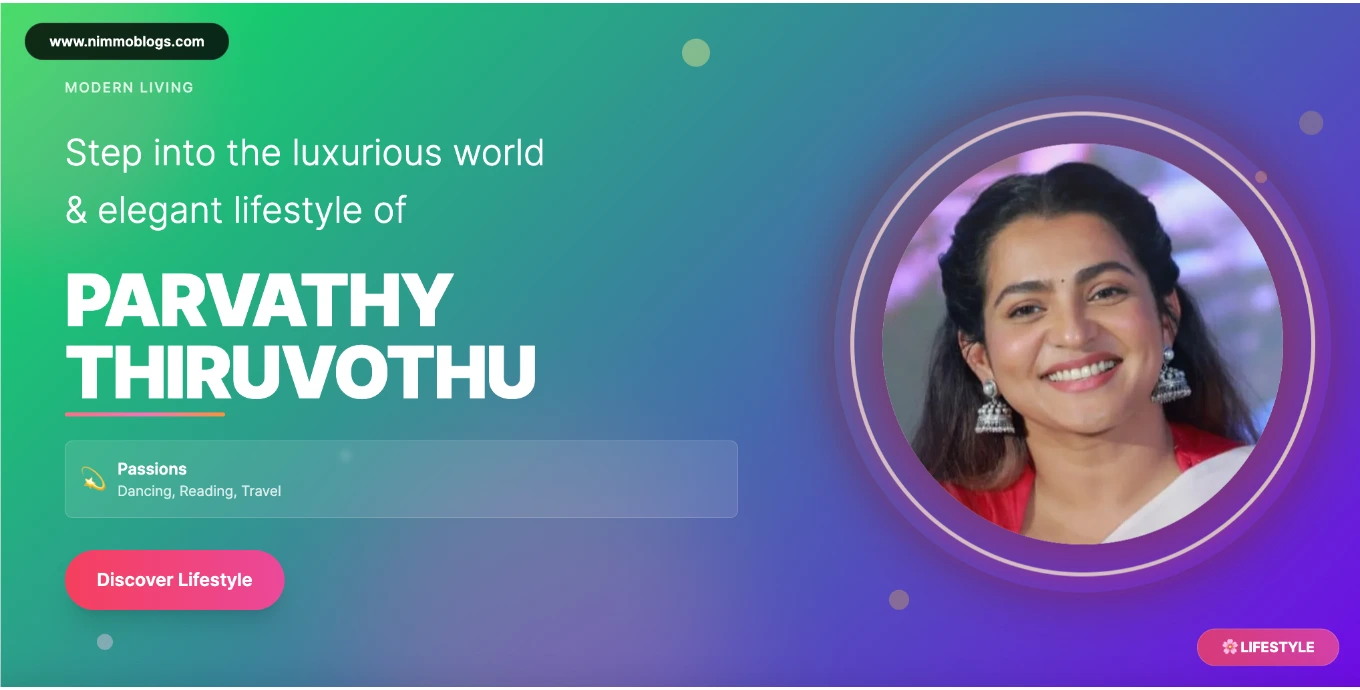
Her style philosophy reflects minimalist elegance rather than fashion-forward trendiness. For public appearances, she favors contemporary Indian silhouettes—well-tailored sarees in natural palettes, elegant kurtas, and occasional Western formals—that emphasize sophistication over flashiness. Unlike many Indian actresses whose red carpet appearances feature heavily embellished designer wear, Parvathy often chooses indie designers and sustainable fashion labels, aligning wardrobe choices with environmental consciousness.
|
Her makeup and grooming preferences lean toward natural looks—minimal foundation, subtle eye makeup, and nude or natural lip colors. This isn't laziness but a deliberate choice rejecting Bollywood's often artificial beauty standards. She's spoken about pressure on actresses to maintain certain appearances and her resistance to such expectations, believing that talent and craft matter more than conforming to narrow beauty ideals.
Hairstyles remain relatively simple—she typically wears her naturally black hair in loose waves, occasional braids, or simple updos rather than elaborate salon styling. This practical approach serves both personal comfort and professional needs—simpler personal styling makes character transformations easier without fighting against a heavily styled personal aesthetic.
What distinguishes Parvathy aesthetically is authenticity—she looks like herself rather than attempting to emulate Bollywood's homogenized beauty standards. This relatability makes her particularly appealing to audiences seeking representation beyond cinema's typical aspirational but unrealistic portrayals of women. Her beauty feels accessible, her style choices inspire without intimidating, and her comfort in her own skin challenges industry pressure toward artificial enhancement.
|
Parvathy Thiruvothu's Awards & Recognition
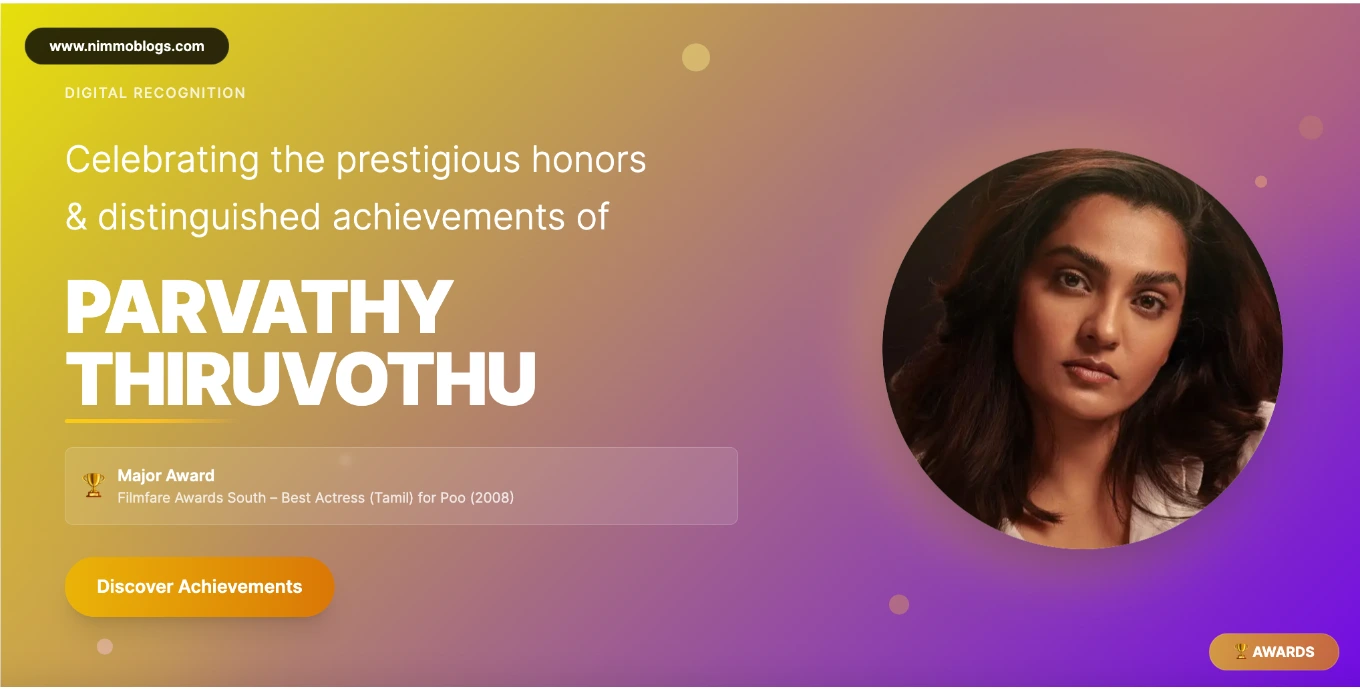
Parvathy Thiruvothu's trophy cabinet reflects consistent critical appreciation across her career. While not pursuing commercial stardom that wins popularity-based awards, her performance-driven work has earned prestigious recognition from Kerala State Film Awards, National Film Awards, Filmfare, SIIMA, and other industry bodies that prioritize artistic merit.
| Year | Award | Category | Movie | Significance |
|---|---|---|---|---|
| 2008 | Filmfare Awards South | Best Actress - Tamil | Poo | Tamil cinema recognition |
| 2015 | Kerala State Film Awards | Best Actress | Ennu Ninte Moideen & Charlie | Dual wins in single year |
| 2015 | Filmfare Awards South | Best Actress - Malayalam | Ennu Ninte Moideen | Industry acclaim |
| 2016 | IIFA Utsavam | Best Leading Role - Female (Malayalam) | Ennu Ninte Moideen | International recognition |
| 2018 | National Film Awards | Special Mention (Actress) | Take Off | National honor |
| 2019 | Asianet Film Awards | Best Actress | Uyare | Performance-driven role |
| 2020 | Asianet Film Awards | Best Actress | Virus | Ensemble excellence |
| 2025 | SIIMA Awards | Critics Best Actress - Malayalam | Ullozhukku | Continued excellence |
National & State Recognition
The National Film Award - Special Mention for Take Off represents India's highest cinematic honor's acknowledgment of her extraordinary performance. Special Mention category recognizes performances that, while not winning outright Best Actress, deserve national recognition for exceptional quality. This achievement places her among elite Indian actresses whose work has earned government-endorsed national acclaim.
Winning Kerala State Film Award for Best Actress twice in the same year (2015) for Ennu Ninte Moideen and Charliea remains a remarkable feat. State awards in Kerala carry particular prestige given the state's sophisticated film culture and rigorous selection processes. Winning dual awards acknowledges not just performance quality but range—she excelled in both period romance and contemporary philosophical drama within a single year.
Industry & Critical Recognition
Her multiple Filmfare Awards South across Malayalam and Tamil categories demonstrate cross-industry appreciation. Filmfare, while sometimes criticized for commercial biases, remains a significant marker of mainstream recognition. Parvathy's Filmfare wins validate that performance-driven work can achieve industry acknowledgment alongside commercial entertainers.
The SIIMA Awards recognition, particularly Critics Awards, highlights consistent appreciation from industry observers who evaluate performances beyond box office metrics. Her recent SIIMA Critics Best Actress win for Ullozhukku (2025) demonstrates sustained excellence—she hasn't rested on past laurels but continues delivering award-worthy performances.
Parvathy Thiruvothu's Women in Cinema Collective & Advocacy Work
Perhaps Parvathy's most significant contribution to Indian cinema extends beyond her performances—it's her fearless advocacy for gender equality, workplace safety, and systemic change through the Women in Cinema Collective (WCC). Co-founded in 2017 following a high-profile actress assault case in Kerala, WCC represents organized resistance against film industry's endemic misogyny, harassment, and exploitation of women workers.
Formation & Mission of WCC
The Women in Cinema Collective emerged after a leading Malayalam actress was abducted and assaulted in 2017, allegedly orchestrated by another prominent actor. The incident exposed the Kerala film industry's toxic masculinity and power structures protecting powerful men while silencing women. Parvathy, along with actresses like Rima Kallingal, Remya Nambeesan, and filmmaker Anjali Menon, founded WCC to demand accountability, safety measures, and structural reforms.
WCC's mission encompasses multiple objectives: ensuring workplace safety for all women in cinema (not just actresses but technicians, junior artists, makeup staff), advocating for equal pay and opportunities, challenging regressive female portrayals in fil, ms, supportthe the ing survivors of harassment and assault, and pushing for industry-wide reforms including prevention of sexual harassment (POSH) committee implementations. The collective rare instance of industry insiders organizing against their own industry's exploitative practices.
Parvathy's Vocal Advocacy
Among WCC members, Parvathy has been particularly outspoken, often facing professional backlash for her public statements. Her willingness to name problematic films, challenge powerful actors, and accountability has made her both celebrated icon among progressives and target of conservative backlash. She's discussed pay disparity, questioning why female leads earn fractions of male co-stars despite equal or greater screen time and performance demands.
She's criticized regressive portrayals of women in mainstream Malayalam cinema, particularly misogynistic dialogues and scenes that normalize violence against women or reduce female characters to male fantasy projections. Her 2017 comments at International Film Festival of Kerala (IFFK) criticizing misogynistic content in the film Kasaba sparked massive online trolling and threats—yet she refused to retract statements, instead using the controversy to highlight how women speaking truth face coordinated intimidation.
Professional Cost of Advocacy
Parvathy's advocacy has carried real professional costs. Some producers and actors reportedly refuse to work with her, viewing her outspokenness as troublesome. Film offers decreased after her IFFK comments, with industry insiders suggesting she'd been "blacklisted" informally. Yet she's maintained her stance, believing temporary career setbacks matter less than long-term industry transformation
Her 2020 resignation from AMMA (Association of Malayalam Movie Artists), protesting the organization's handling of the 2017 assault case and misogynistic remarks by association members, demonstrates her willingness to sacrifice industry connections for principles. This resignation meant losing networking opportunities, support structures, and insider advantages that association membership provides—yet she chose integrity over convenience.
Impact & Legacy
WCC's advocacy has achieved tangible results: increased awareness about workplace harassment, pressure on production houses to implement POSH committees, public discourse about pay disparity, and a cultural shift in how Malayalam cinema discusses gender issues. While systemic change remains incomplete, WCC established precedent for industry self-critique and organized advocacy that inspired similar movements across Indian cinema.
For international audiences, Parvathy's advocacy parallels Western movements like Time's Up and #MeToo in entertainment industries. Her work demonstrates that Indian cinema, despite cultthe the ural differences, faces similar gender-based exploitation and power imbalances—and that courageous individuals can catalyze change even at personal cost.
Parvathy Thiruvothu's Controversies & Challenges
Unlike many Indian celebrities whose controversies involve scandals or personal misconduct, Parvathy Thiruvothu's "controversies" stem from speaking truth to power—challenging industry misogyny, critiquing regressive content, and demanding accountability from powerful figures. These aren't scandals but principled stands that conservative sections label controversial to delegitimize her advocacy.
IFFK 2017 Comments & Backlash
The most publicized controversy occurred at the 2017 International Film Festival of Kerala when Parvathy criticized misogynistic dialogues in the Malayalam film Kasaba during a panel discussion. She expressed discomfort with scenes and dialogues normalizing violence against women and questioned why such content gets celebrated as mass entertainment. Her comments specifically referenced the film's lead actor without naming him directly—yet everyone understood the reference.
The response was swift and vicious. Social media erupted with coordinated trolling, rape threats, death threats, and campaigns demanding she apologize. Fan associations of the actor she implicitly criticized led organized harassment campaigns. The intensity of backlash revealed how deeply misogyny is embedded in film fan culture—criticizing problematic content gets treated as personal attack deserving violent retaliation.
Rather than issuing defensive clarifications or apologies, common when celebrities face backlash, Parvathy stood firm. She reiterated her instincts, emphasized that criticism targets content not individuals, and used the controversy to highlight exactly the toxic mascul,,inity she'd initially criticized. This courage in face of intimidation earned respect from progressives while hardening opposition from conservative segments.
AMMA Resignation & Industry Alienation
In 2020, Parvathy resigned from AMMA (Association of Malayalam Movie Artists) along with other WCC members, protesting the association's handling of the 2017 actress assault case and misogynistic remarks by association leaders. The resignation publicly challenged the Malayalam film industry's most powerful organization, essentially declaring that maintaining membership meant complicity with misogyny.
This resignation carried professional risks—AMMA membership provides networking, dispute resolution, and insider advantages crucial for career sustainability. By resigning publicly with specific accusations against association leadership, she ensured professional alienation from powerful industry figures. Yet she prioritized principles over convenience, demonstrating integrity that many admire even if few emulate.
Reduced Film Offers & "Blacklisting"
Following her IFFK comments and continued advocacy, Parvathy's film has notably decreased. While no formal blacklist exists, industry insiders acknowledged informal understanding among certain producers and actors to avoid working with her. This represented collective punishment for speaking uncomfortable truths—using economic leverage to silence dissent.
Rather than capitulating to pressure, Parvathy became more selective, focusing on quality projects with collaborators sharing her values. Her work continued—films like Uyare, Virus, and Ullozhukku—proving that principled actresses can sustain careers even when mainstream industry attempts marginalization. Her resilience demonstrated that courage, combined with undeniable talent, can overcome industry gatekeeping.
Current Standing
Today, Parvathy's reputation among progressive audiences, critics, and thoughtful industry members remains strong. While she's lost certain commercial opportunities and powerful industry connections, she's gained something more valuable—moral authority and respect that transcends box office metrics. Young actresses cite her as inspiration, feminist audiences celebrate her courage, and even those disagreeing with specific positions acknowledge her integrity.
Parvathy Thiruvothu's Interesting Facts & Trivia
Here are fascinating and lesser-known facts about Parvathy Thiruvothu that showcase her unique personality, diverse talents, and remarkable commitment to principles:
- Parvathy's full name is Parvathy Thiruvothu Kottuvattaa, with "Thiruvothu" and "Kottuvattaa" being family names. She professionally uses "Parvathy Thiruvothu" to distinguish herself from other actresses named Parvathy in South Indian cinema.
- She is trained in Bharatanatyam, one of India's classical dance forms, and this training significantly influences her physical expressions and movement in films, adding grace and intentionality to her performances.
- Both her parents are practicing lawyers, and growing up in a legal household exposed her to discussions about justice, equality, and constitutional rights—foundational influences on her later advocacy work.
- Parvathy adopted a plant-based/vegan lifestyle around 2015, driven by ethical considerations about animal welfare and environmental sustainability rather than merely health or diet trends.
- She co-founded the Women in Cinema Collective (WCC) in 2017, making her not just an actress but active organizer for gender equality and workplace safety in Indian cinema,,, rare combination of celebrity status and grassroots activism.
- Despite winning National Award - Special Mention for Take Off, Parvathy maintains humility about achievements, often crediting directors, writers, and collaborators rather than claiming sole credit for performance success.
- She is an avid reader with a particular interest in feminist literature, social justice writings, and contemporary fiction—regularly sharing book recommendations on social media and encouraging followers toward reading culture.
- Parvathy has worked across four different language industries—Malayalam, Tamil, Kannada, and Hindi—demonstrating linguistic versatility rare among Indian actresses who often remain confined to a single regional industry.
- Her criticism of misogynistic content in films at IFFK 2017 sparked one of Malayalam cinema's most significant public debates about gender representation, forcing industry conversations about content responsibilities.
- Unlike many Indian celebrities pursuing luxury brand endorsements, Parvathy is notably selective about commercial associations, preferring to endorse brands aligning with her values around sustainability and social responsibility.
- She resigned from AMMA (Association of Malayalam Movie Artists) in 2020, protesting misogynistic remarks and handling of assault cases—sacrificing professional networking for principled stand against industry complicity.
- Parvathy's fashion choices emphasize indie designers and sustainable fashion labels rather than mainstream luxury brands, aligning wardrobe with environmental consciousness and support for smaller creative businesses.
- Despite facing professional backlash and reduced film offers after her advocacy work, she's maintained her career through selective quality projects, proving that principled actresses can sustain themselves without compromising values.
- She has a Bachelor's degree in English Literature from All Saints College, Thiruvananthapuram—an academic background that informs her script analysis and character development approaches.
- Parvathy's Take Off role required extensive research into the psychological trauma of conflict zone survival, meeting real nurses and understanding their experiences to bring authenticity to performance.
- She maintains a relatively private personal life despite her celebrity status, rarely discussing relationships or personal matters publicly, focusing instead on professional work and advocacy activities.
|
Parvathy Thiruvothu's Social Media & Fan Following
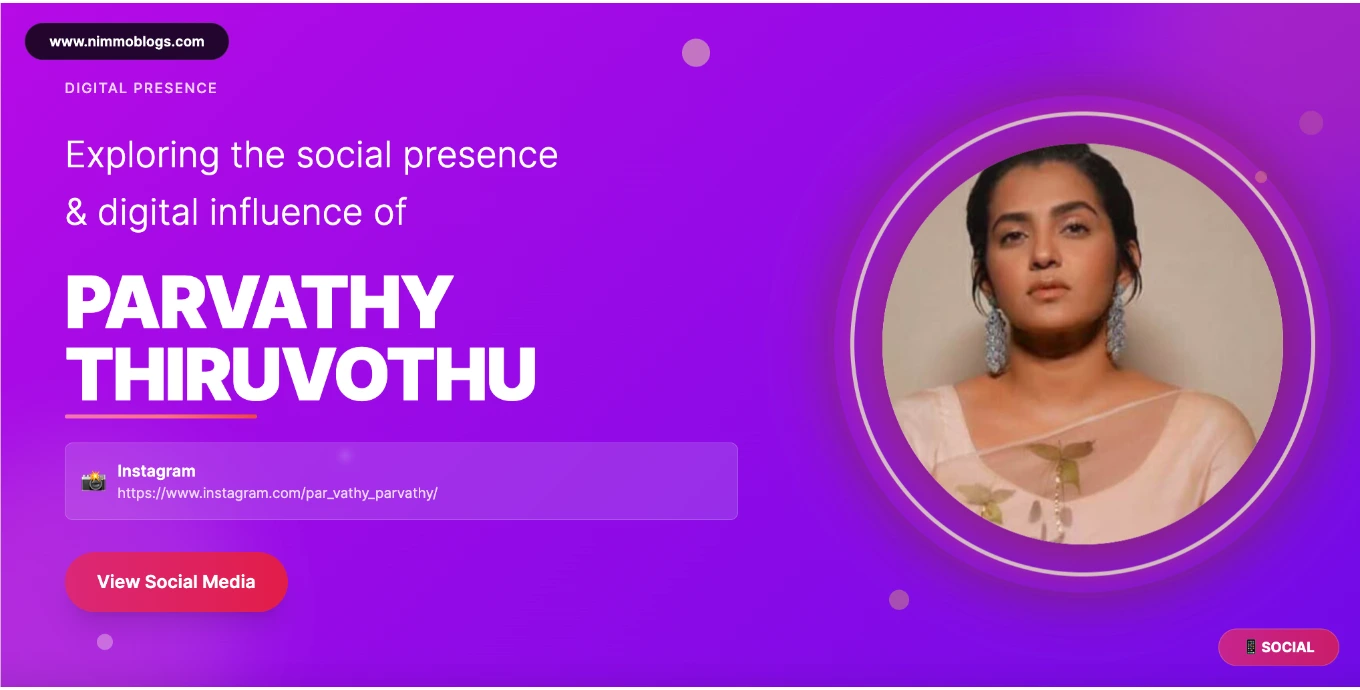
Parvathy Thiruvothu maintains an active social media presence across Instagram, Facebook, and Twitter, using platforms for film promotions, advocacy work, and thoughtful engagement with followers. Her social media strategy differs markedly from typical celebrity accounts—less glamor, showcasing, more substance, and a willingness to discuss difficult topics that many celebrities avoid.
| Platform | Handle | Followers | Content Type |
|---|---|---|---|
| @par_vathy_parvathy | 1.5+ million followers | Film updates, advocacy posts, book recommendations, personal reflections | |
| Parvathy Thiruvothu | 800,000+ likes | Official updates, video content, WCC statements | |
| Twitter/X | @parvathyofs | 300,000+ followers | Industry discussions, advocacy threads, social commentary |
Her Instagram feed balances professional and personal content—film promotions, behind-the-scenes glimpses, occasional personal photographs, book covers with reading recommendations, and advocacy-related posts about WCC activities or gender issues. Unlike celebrity accounts focused solely on glamorous self-presentation, her feed feels authentic and purposeful the l, using platform for communication rather than merely brand building.
Twitter serves as her primary platform for advocacy and substantive discussions. She posts longer threads analyzing film industry issues, shares articles about gender equality, responds to current events affecting women in cinema, and engages thoughtfully with followers' questions and concerns. Her Twitter presence demonstrates how social media can facilitate serious discourse rather than merely superficial engagement.
Facebook maintains official updates and longer-form content—video interviews, WCC statements, detailed project announcements—reaching slightly older demographic less active on Instagram or Twitter. The platform allows more comprehensive storytelling about complex issues that Twitter's character limits or Instagram's visual focus can't adequately address.
Parvathy's social media engagement emphasizes quality over quantity. She doesn't post daily glamor shots or constant promotional content. Instead, posts feel intentional—each serves a purpose, whether informing about projects, sharing meaningful content, or advancing advocacy goals. This selective approach maintains follower interest while avoiding content saturation that numbs audiences to constant celebrity presence.
Her willingness to discuss difficult topics on social media—misogyny in films, harassment experiences, pay disparity, political issues—sets her apart from celebrities who maintain carefully managed, controversy-free online personas. This authenticity resonates particularly with younger, progressive audiences seeking celebrities who use platforms for more than self-promotion.
Frequently Asked Questions About Parvathy Thiruvothu
Personal Information
What is Parvathy Thiruvothu's real age and birth date?
Parvathy Thiruvothu was born on April 7, 1988, in Kozhikode (Calicut), Kerala, India. She is currently 37 years old as of 2025. Her zodiac sign is Aries, known for courage, independence, and pioneering spirit—traits evident in her career choices and advocacy work.
What is Parvathy's height and weight?
Parvathy stands 5 feet 5 inches (165 cm) tall and weighs approximately 121 lbs (55 kg). She maintains a healthy lifestyle through plant-based diet and adapts her appearance according to character requirements rather than pursuing conventional beauty standards.
Is Parvathy Thiruvothu married?
No, Parvathy is currently unmarried and has not publicly discussed relationships or personal romantic life. She maintains strong boundaries between public career and private personal matters, focusing public presence on work and advocacy rather than personal relationships.
Does Parvathy have children?
No, Parvathy does not have children. At 37, she faces typical Indian societal pressure regarding marriage and children, yet she's chosen to prioritize career and advocacy work, demonstrating that women can find fulfillment beyond traditional family roles.
What is Parvathy's educational background?
Parvathy completed schooling at Kendriya Vidyalaya, Pangode, in Thiruvananthapuram and earned a Bachelor of Arts degree in English Literature from All Saints College, Thiruvananthapuram. She's also trained in Bharatanatyam classical dance. This academic and artistic background informs her intellectually rigorous approach to acting.
Career & Professional Life
What was Parvathy's debut film?
Parvathy made her film debut with Out of Syllabus (2006) in a supporting role, followed by lead ensemble work in Notebook (2006), both Malayalam films. She later debuted in Kannada with Milana (2007) and Tamil with Poo (2008), which became her breakthrough performance, earning Filmfare Best Actress (Tamil).
What are Parvathy's most acclaimed movies?
Parvathy's most critically acclaimed films include Poo (2008), Bangalore Days (2014), Ennu Ninte Moideen (2015), Charlie (2015), Take Off (2017), Qarib Qarib Singlle (2017), Uyare (2019), and Virus (2019). Each film demonstrates her range across genres, languages, and character types while maintaining performance excellence.
Has Parvathy won a National Award?
Yes, Parvathy received the National Film Award - Special Mention (Actress) for her powerful performance in Take Off (2017), a film about Indian nurses trapped in Iraq during the ISIS conflict. This represents India's highest cinematic honor's recognition of her extraordinary work.
What languages has Parvathy worked in?
Parvathy has worked across Malayalam, Tamil, Kannada, and Hindi cinema, demonstrating linguistic versatility rare among Indian actresses. Her multilingual career spans South Indian regional industries and Bollywood, choosing quality scripts regardless of language or industry prestige.
Has Parvathy worked in Bollywood?
Yes, Parvathy made her Bollywood debut with Qarib Qarib Singlle (2017), an unconventional romantic comedy opposite the late Irrfan Khan. The film performed moderately at the box office but earned critical appreciation. She's remained selective about Hindi projects, prioritizing script quality over industry visibility.
Financial & Lifestyle
What is Parvathy Thiruvothu's net worth in 2025?
Parvathy's exact net worth is not publicly disclosed, consistent with her preference for financial privacy. Industry estimates suggest a comfortable financial standing earned through consistent work across Malayalam, Tamil, Kannada, and Hindi cinema, though specific figures remain speculative and unverified.
Why doesn't Parvathy disclose her net worth?
Unlike Bollywood celebrities who publicize wealth and assets, Parvathy maintains a low-profile financial existence focused on work quality rather than wealth display. This aligns with her overall values, emphasizing substance over show, artistic merit over commercial success, and privacy in personal matters.
What is Parvathy's diet and lifestyle?
Parvathy adopted a plant-based/vegan lifestyle around 2015, driven by ethical considerations about animal welfare and environmental sustainability. She occasionally discusses these choices on social media, encouraging conscious consumption without preachy moralizing. Her lifestyle emphasizes health, sustainability, and alignment between values and actions.
What are Parvathy's hobbies and interests?
Parvathy is an avid reader with a particular interest in feminist literature, social justice writings, and contemporary fiction. She's trained in Bharatanatyam classical dance, enjoys travel for both leisure and cultural exploration, and actively engages in advocacy work through the Women in Cinema Collective. Her interests reflect intellectual curiosity and social consciousness.
Awards & Recognition
What major awards has Parvathy won?
Parvathy has won Kerala State Film Award for Best Actress (2015) for both Ennu Ninte Moideen and Charlie, National Film Award - Special Mention for Take Off (2017), Filmfare Best Actress (Tamil) for Poo (2008), multiple Filmfare Awards South across the Malayalam category, SIIMA Critics Awards, and Asianet Film Awards for various performances.
How many Kerala State Film Awards has Parvathy won?
Parvathy won the Kerala State Film Award for Best Actress twice in the same year (2015)—for both Ennu Ninte Moideen and Charlie. This remarkable achievement demonstrates her extraordinary range, excelling in both period romance and contemporary philosophical drama within a single year.
Advocacy & Women in Cinema Collective
What is the Women in Cinema Collective (WCC)?
The Women in Cinema Collective is an organization co-founded by Parvathy and other women in Malayalam cinema in 2017, advocating for gender equality, workplace safety, and better representation of women in the film industry. WCC emerged after a high-profile actress assault case, demanding accountability and systemic reforms.
Why did Parvathy resign from AMMA?
Parvathy resigned from AMMA (Association of Malayalam Movie Artists) in 2020 along with other WCC members, protesting the association's handling of the 2017 actress assault case and misogynistic remarks by association leaders. The resignation publicly challenged the Malayalam film industry's most powerful organization, prioritizing principles over professional convenience.
What was the IFFK 2017 controversy?
At the 2017 International Film Festival of Kerala, Parvathy criticized misogynistic dialogues in the Malayalam film Kasaba during a panel discussion. Her comments sparked massive backlash, including trolling, threats, and coordinated harassment campaigns. Rather than apologizing, she stood firm, using the controversy to highlight toxic masculinity in film fan culture.
Has Parvathy's advocacy affected her career?
Yes, Parvathy's outspoken advocacy has carried professional costs. Some producers and actors reportedly avoid working with her, viewing her outspokenness as troublesome. Film offers decreased after her IFFK comments, with industry insiders acknowledging informal "blacklisting." Yet she's maintained a career through selective quality projects, proving that principled actresses can sustain themselves without compromising values.
Streaming & International Presence
Where can I watch Parvathy's movies online?
Parvathy's films are available on major streaming platforms, including Amazon Prime Video (Malayalam and Tamil collections), Netflix (select titles like Qarib Qarib Singlle), SonyLIV (Wonder Women), and Disney+ Hotstar (various titles). Many films include English subtitles, making them accessible to international audiences.
Has Parvathy worked in a web series?
Yes, Parvathy appeared in the Netflix anthology Navarasa (2021) and starred in the SonyLIV web film Wonder Women (2022). These streaming projects reach global audiences and represent growing opportunities for quality content outside traditional theatrical releases, allowing more experimental and women-centric narratives.
Is Parvathy popular outside India?
Parvathy enjoys recognition among Indian diaspora communities and international audiences discovering Indian regional cinema through streaming platforms. Her work's thematic depth—addressing gender issues, social justice, and universal human experiences—resonates with global audiences seeking sophisticated storytelling beyond mainstream Bollywood fare.
Comparisons & Context
How does Parvathy compare to other Indian actresses?
Parvathy distinguishes herself through consistent choice of character-driven roles over commercial star vehicles, fearless advocacy for gender equality despite professional costs, and willingness to work across linguistic industries without chasing Bollywood stardom. Her career parallels Western actresses like Frances McDormand—combining performance excellence with social activism.
What makes Parvathy different from typical Bollywood actresses?
Unlike many Bollywood actresses who prioritize glamor, commercial success, and maintaining non-controversial public personas, Parvathy emphasizes substance, artistic integrity, and vocal advocacy on difficult issues. She's willing to sacrifice professional opportunities rather than compromise values, using her celebrity platform for social change beyond personal brand building.
Why is Parvathy considered a feminist icon?
Parvathy co-founded Women in Cinema Collective, consistently speaks about gender equality and workplace harassment, challenges regressive female portrayals in films, and has faced professional backlash for advocacy without retreating from positions. Her combination of performance excellence and fearless activism makes her a role model for progressive audiences seeking celebrities who use platforms for meaningful change.
|
Related Articles
Explore the journeys of remarkable individuals who continue to inspire across industries and cultures with their unique contributions.
- Prithviraj Sukumaran Biography, Age, Net Worth, Height, Movies & Facts
- Asin Thottumkal Biography, Age, Net Worth & Movies
- Dileep Biography, Age, Net Worth, Height, Movies & Facts
- Nivin Pauly Biography, Age, Net Worth, Height, Movies & Facts
- Amala Paul Biography: Age, Net Worth, Movies & Facts
- Vijay Deverakonda Biography, Age, Net Worth, Height, Movies & Facts
- Naga Chaitanya Biography, Age, Net Worth, Height & Movies
- Aruna Vijay Biography, Age, Career, MasterChef India & Facts
- Jahnavi Dasetty Biography, Age, Net Worth & Career
- Sadhique Aboobacker Biography, Age, Height, Instagram & Facts
- Madan Gowri Biography, Age, YouTube Channel, Net Worth & Facts
- Sivaangi Krishnakumar Biography, Age, Net Worth, Height
- Shanmukh Jaswanth Biography, Age, Net Worth, Height & Career
- Ahaana Krishna Biography, Age, Net Worth & Movies
- Pearle Maaney Biography, Age, Net Worth, Height & Movies
For more celebrity biographies covering Malayalam, Tamil, Telugu, Kannada cinema and the Indian film industry, visit our .

Goal Setting: How To Set Goal In Life

Podcast: How To Cancel Spotify Premium

Podcast: Podcast That Should Listen

Podcast: What Is Google Podcast
Podcast: What Is Podcast And How Does It Works

Time Management: Good Time Management Skills

Time Management: How To Improve Time Management Skills
Top 25 Ways To Increase Productivity

Robotics: What Is Robotics And How Does It Work

Positive Thoughts: Positive Thoughts Can Change Your Life

How To Become Rich With No Money

Top 5 Ways To Become A Rich

Communication: Top 7 Ways To Communicate Effectively

Personality Development Tips For Men

Personality Development Tips For Woman
©2026 Nimmoblogs
All Right Reserved.
Made with
 by Hina Aggarwal